

![[Translate to EN:]](/files/pics/7/2/csm_Mouse__860x586px_4295e63b71.jpg "[Translate to EN:]")
![[Translate to EN:] Ratten](/files/pics/0/9/csm_Rat__860x586px_e3e988d139.jpg "[Translate to EN:] Ratten")
![[Translate to EN:] Maulwurf](/files/pics/2/e/csm_Mole__860x586px_d43e7e8948.jpg "[Translate to EN:] Maulwurf")
![[Translate to EN:] Marder](/files/pics/d/6/csm_Marten__860x586px_7508da5714.jpg "[Translate to EN:] Marder")
![[Translate to EN:] Fliege](/files/pics/a/d/csm_Fly__860x586px_66c70bb32f.jpg "[Translate to EN:] Fliege")
![[Translate to EN:] indian-meal moth on oatmeal](/files/pics/b/6/csm_indian-meal-moth-on-oatmeal_low_659108f917.jpg "[Translate to EN:] indian-meal moth on oatmeal")
![[Translate to EN:] Schnecken](/files/pics/5/f/csm_Slug__860x586px_da4b2d7f83.jpg "[Translate to EN:] Schnecken")
![[Translate to EN:] Vogel](/files/pics/8/9/csm_Bird__860x586px_273b7ffaf9.jpg "[Translate to EN:] Vogel")


FIELD MOUSE
Distribution / habitat
Field mice are small voles, a genus of rodents in the subfamily of voles. This group comprises around 60 species in total, which are found in North America, Europe and Asia.
The true field mice in the narrower sense are widespread in Europe and large parts of Asia and are the most common vertebrates in Europe. Exceptions are the Arctic and hot and dry regions.
The field vole mainly inhabits open landscapes such as meadows, pastures, fields and steppes. However, it also colonises gardens, parks, dunes and very sparse pine forests. Areas with little tillage and perennial crops are favoured. The field vole builds its burrows in soils with a low groundwater level. Year-round ground cover by plants favours the establishment of field mice.

Colony of field mice in a meadow, marked with sticks
Lifestyle / Behaviour
The animals live solitary lives in burrows, except during the mating season. Colonies are often formed from several burrows. A mouse territory is 10-50m² in size. Each burrow has several entrances, which are always open. The burrow entrance measures about 3-4cm. There is little or no soil, which is scattered loosely around the entrance. The entrances to the burrows are usually connected by a branched network of above-ground passages. The walkways are kept clear by eating away the vegetation. Around a third of the population in a colony are "wanderers" without a territory who contribute to the spread of the infestation.

Footpaths and field mouse holes in heavily damaged meadows
The field mice collect their food above ground and have to leave the protective burrow to do so. Their stay on the surface is kept as short as possible and outside the burrow the animals are extremely shy. They move very quickly to avoid falling prey to predators. The above-ground walkways and many open entrances serve as escape routes and are shared by all the animals in the colony. There are also pure escape structures that are not inhabited. Above-ground paths and underground passages are equipped with downpipes to drain rainwater and thus prevent water from entering the burrow. The nest and storage chambers are located at a depth of around 30cm and are lined with dry plant parts. Droppings are deposited above ground at fixed droppings sites on the walkways.

Droppings of the field mouse in the footpath

Schematic representation of a field mouse construction
Field mice are diurnal and nocturnal. They also do not hibernate. On the contrary, they feel very comfortable under a closed snow cover and are protected from predators. Their food, grasses and herbs, is available all year round. They therefore also reproduce to a lesser extent in winter.
Field mice often colonise existing burrows and tunnels of other animals, especially those of moles. Moles and voles always keep their tunnel system closed. Open holes in molehills or tunnels therefore indicate colonisation by field mice.
Field mice are an important food source for a variety of predators such as: Fox (up to 3000 mice/year), birds of prey (buzzard, red kite, falcon, 4-6 field mice/day); owls (up to 40 mice/night); badgers, stoats, weasels, polecats, martens, cats, snakes, herons, storks and cranes.

A successful weasel, barely bigger than its prey
Nutrition
Field mice are predominantly vegetarians. They eat mainly leaves and roots of various grasses, herbs and crops in the immediate vicinity of the nest, such as clover, rape, lucerne, cereals, beetroot, etc. When hungry, they also eat stems, grains and seeds from plants as well as tree bark. Occasionally insects, spiders, worms or snails are also eaten.

Occasional exceptions prove the rule: This field mouse eats an earthworm
The food is usually dragged into the burrow and eaten there in peace and safe from predators. From late summer onwards, they increasingly stock up on grains and roots.

Leaves and stalks are fed into the burrow
Reproduction
Field mice are characterised by the highest reproduction rate of all rodents. Under favourable conditions, they reproduce all year round and can thus compensate for the high losses caused by predators.
- Litter size: 6 - 12 kittens per litter
- Number of litters: 2 - 7 per year
- Sexual maturity: 2 - 3 weeks
- Gestation period: 19 - 21 days
Breeding season: In principle all year round, although the breeding rate is highest between April and September. The females mate while they are still suckling the previous litter.
Every 3 to 5 years, depending on the weather, field mice populations can experience mass reproduction, reaching densities of thousands of individuals per hectare. This population explosion, driven by their preference for eating plant roots, can cause significant crop failures, sometimes forcing farmers to abandon entire fields. However, in the following winter and spring, these populations usually collapse for reasons that remain largely unexplained.
In the event of mass reproduction, populations can grow from a few individuals to over 5,000 field mice per hectare of farmland. In Germany alone, the animals cause damage totalling more than 100 million euros annually.
Facts
- Scientific name: Microtus arvalis
- Colour: upper side grey to brown, underside lighter, whitish, beige or yellowish.
- Weight: 18-40g
- Body length: 9-12cm
- Tail length: approx. 3cm
- Body: compact, round head, blunt muzzle
- Ears: small, round, barely protruding from the coat.
- Eyes: small protruding black eyes
- Life expectancy: theoretically 2-3 years; in the wild often barely more than 3 months due to strong stalking by predators
- Faeces: brown-green faecal pellets; 3-5mm long;
The earth mouse (Microtus agrestis) is very similar in appearance, lifestyle and control, although the earth mouse prefers more humid locations. The two species are almost indistinguishable to the layman.
Traces & Damage
Typical signs of field mouse infestation are the many open holes and the connection with footpaths. With a bit of luck, the droppings can also be found along the paths.

Stronger infestation in meadow
In the vicinity of field mouse burrows, the feeding of field mice results in losses to the vegetation (sward, oilseed rape, cereals, etc.). However, these only become clearly visible when the infestation is more severe.
In the autumn and winter months, when the food supply becomes scarcer, young trees may suffer feeding damage to their trunks, roots and buds. As a result of the damage, the saplings can wither, be stunted in their growth or even die quickly.
Field mice usually begin their damage to woody plants above ground, but often work their way down to the roots, resulting in damage similar to that caused by water voles. The width of the gnaw marks provides additional clues as to the cause of the damage: in the case of field mice it is approx. 1.5 millimetres.
Field mice can be infected with diseases that are transmissible to humans. These include hantavirus, fox tapeworm, toxoplasmosis, rabies, leptospirosis and tularaemia. These are all diseases that can even be fatal under certain circumstances.
Field mice are among the hosts of the Hanta virus (Tula virus), which can be dangerous to humans. Infected animals excrete the pathogens in their saliva, urine and faeces. The disease can be transmitted to humans through contact with infected animals, their faeces or inhalation of infectious dust or droplets. In humans, Hanta leads to severe flu-like illnesses with potentially fatal kidney failure.
If cats eat mice infected with toxoplasmosis, they become carriers and can pose a risk to pregnant women and people with weakened immune defences.
Tularemia (rabbit plague) is an infectious disease that occurs in wild rodents and is caused by the bacterium Francisella tularensis and is often fatal. The disease can be transmitted to humans through contact with diseased animals, their faeces or inhalation of infectious dust or droplets. It is a notifiable animal disease in Germany and can lead to life-threatening illnesses in humans.
Field mice are an intermediate host of the fox tapeworm (Echinococcus multiocularis). Humans can become infected through direct contact with field mice and their faeces, but also through contact with pets such as cats or dogs that have eaten infected animals. Fox tapeworm infections in humans are rare but devastating for those affected. The tapeworms lodge in vital organs such as the liver, lungs or brain. There is no cure; the only way to stop the destruction of the infected organs is to take strong medication for the rest of your life.
Leptospirosis can be transmitted through contact with diseased rodents or their faeces via (injured) skin or mucous membranes. The disease leads to severe kidney, liver or lung problems that can be fatal if left untreated.
To protect against infection, gloves should therefore always be worn when setting traps and hands and arms should be washed thoroughly after work.
Nature and species conservation
Protection status: The field mouse is not an endangered species, is not protected and can be controlled at any time.
Prevention
The following tips will help prevent damage caused by field mice:
- On agricultural land: install perches and nesting boxes for birds of prey.
- Do not hunt predators such as weasels, stoats, martens and foxes, but encourage them with nesting boxes and hiding places.
- On large-scale intensive monocultures, field mice can multiply rapidly, spread and cause serious damage. These monocultures do not provide a habitat for the predators of the field mouse. Hedges and flowering areas must be encouraged in cultivation to create habitats for wild animals. Predators such as birds of prey and owls need refuge areas such as hedgerows and copses for breeding and as cover. A structurally rich agricultural landscape is the best measure against mass reproduction of the field vole.
- The field mice mainly migrate above ground. A fence with a mesh of approx. 10mm around a plot or cultivated area is very effective at keeping field mice out. The mesh must be buried 20-30cm deep, 40cm high and kept free of vegetation. Such fencing is also effective against moles and voles. Setting up traps along these fences has proven to be effective. If the traps are designed appropriately (live traps with hinged lids), foxes and cats very quickly learn to get the mice out of the trap. The area inside the fencing can then be cleared of field mice through targeted control.
- Instead of a fence, a plot can also be protected with a surrounding steep trench 50cm deep and 20cm wide using special cutters. Trap trays are embedded in the trench. Immigrating mice slide into the trench and later land in the catch basin in search of a way out. Predators such as birds or foxes take the mice from the traps.
- Field mice often use mole tunnel systems. Moles clearly favour the colonisation of voles and field mice. Therefore, moles should also be controlled on infested or endangered areas. (Note: In Germany and Austria, moles are strictly protected and may not be controlled without official authorisation).
- Intensive tillage such as ploughing, harrowing, cultivating or tilling is currently very hard on field mice. However, these measures do not have a long-term effect. Tilled areas are quickly recolonised from field margins. The field mice can quickly make up for the initial losses thanks to their rapid reproduction.

Mole burrow colonised by field mice.
Acoustic Animal Repellers
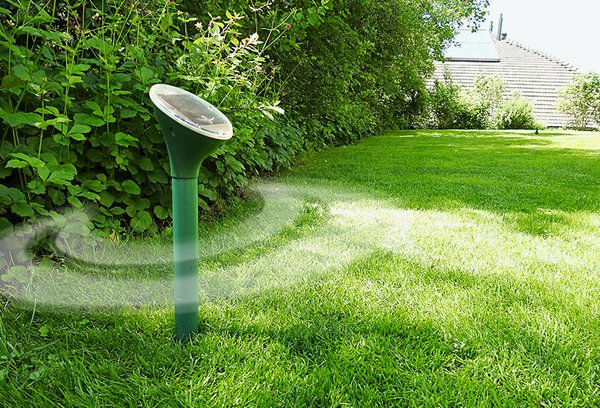
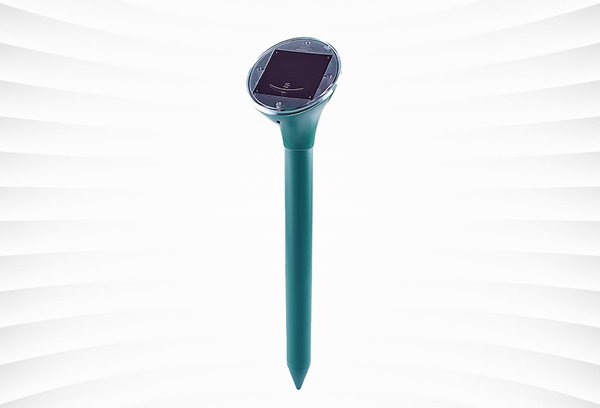
Field mice are very skittish animals. Sound waves and vibrations disturb them and can drive them out of their territory. Acoustic animal repellers are an animal and environmentally friendly method of preventing field mice from entering the garden. The waterproof SWISSINNO solar mole repeller has a large range of 650m². The integrated solar cell, together with the device's rechargeable battery, ensures 24-hour continuous operation. The repeller is effective against field mice as well as voles and moles.
A 100% guarantee of success cannot be given with this method. It is a gentle procedure. The animals always have the option of staying despite the interference. Various reasons can lead to a reduced effect: For example, habituation may occur, individual individuals may have difficulty hearing or simply do not feel disturbed, or there may be no suitable alternative territory. Soil conditions can also play a role. Very light, sandy or dry soils transmit sound poorly.
Controlling field mice with traps
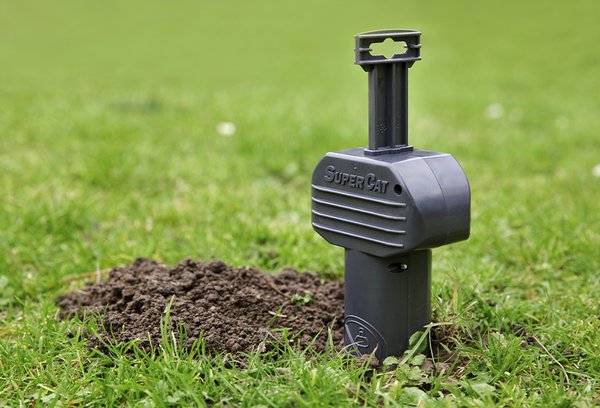
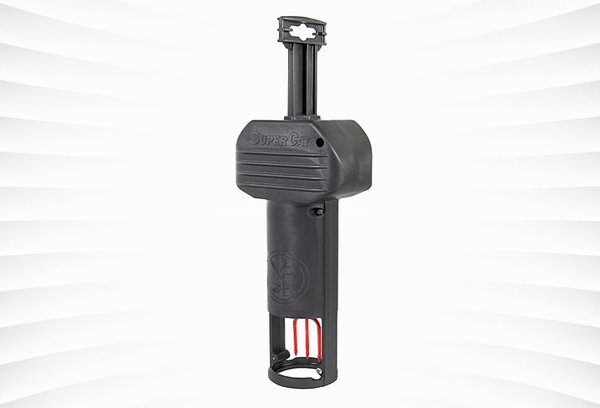
Snap traps are a sustainable and environmentally friendly method of controlling field mice. However, the effort involved is considerable. Up to 1000 traps are needed per hectare. Trapping is therefore recommended for smaller areas (private gardens) and for valuable crops.
Tip to save on traps: Field mouse burrows have up to ten entrances. Only a few of these burrow entrances are actually used. So, before you start setting traps, you should close up all open mouse holes or cover them with earth. The next day the traps are then set, but only where the mice have dug the entrance free again. This means that far fewer traps are needed and the yield increases significantly.
There is currently no trap that has been developed specifically for catching field mice. However, they can be easily caught with the following SWISSINNO traps in descending order:
SuperCat mousetrap; FSC wooden mousetrap; classic wooden mousetrap:
Nutella bait; place trap in path; fix with nail, wooden stick or string; cover against birds;

SuperCat mousetrap with caught field mouse

No-See-No-Touch mousetrap: Nutella bait; place trap in walkway; no fixation or cover required

No-See-No-Touch mousetrap in use against field mice
SuperCat vole trap: no bait required, place the trap at the nest entrance. As soon as a field vole tries to run through the trap or presses the trigger, the trap is triggered and the mouse is caught. The trap is very easy to use, lasts for many years, catches field mice and voles from both directions and is safe for users and pets.

SuperCat vole trap, placed in the entrance of a field vole burrow. One side remains open.

Field mouse, caught while crossing the trap. No bait required.
The SuperCat Mousetrap PRO also works for field mice, but the yield is lower than with the previous traps.

Mousetrap PRO SuperCat, placed in front of the field mouse hole and fixed with a nail.
Alternative baits are: toasted bread, peanut butter, sunflower seeds, cereal grains, carrot or apple. Adding maltol increases the attractiveness.
Live traps: In principle, field mice can also be caught with live traps. Typically, tube traps with flaps that open inwards are used. The use of live traps is problematic for several reasons:
The use of live traps is even more labour-intensive than that of snap traps
They must be checked several times a day if the field mouse is to be released in an acceptable condition.
A field mouse that is released far from its territory has very little chance of survival.
You must first obtain permission from the landowner on whose land the mouse is to be released.
Tube traps are also dangerous for moles and non-target organisms.
Control of the field vole in agriculture:
Mechanical tillage, poison baits or soil fumigation with hydrogen phosphide are suitable for large-scale control of the field vole on agricultural land. If the field mice are initially chased away by ploughing (destruction of burrows and nesting chambers), for example, it can be observed that they quickly recolonise the areas from adjacent field margins.
The "hole-punching method" can be used to determine whether field mice need to be controlled.
Keep the grass on infested grassland short before winter. Then close all mouse holes in an area of 250m² (16 x 16m). After 24 hours, count the number of holes that have reopened. The control guideline for winter cereals and oilseed rape is 5 to 8 holes per control area, and 11 holes per control area for grassland. Five to eight reopened holes correspond to around 80 - 120 mice/ha.
Controlling field mice with poisoned bait
Control with traps is not possible with reasonable effort on large areas and heavy infestations. In comparison, the use of mice poison is much quicker and cheaper.
Preparations containing zinc phosphide in the form of poison wheat or poison lentils or poison baits with anticoagulants are authorised for control. Lentils are characterised by a lower outgassing of the active ingredient, so that the mice accept the bait better. In the case of poisoned wheat, 2-5 grains are applied per hole, in the case of poisoned lentils 5 lentils per hole. To avoid poisoning non-target species, the bait must be placed deep into the mouse holes using a bait gun. The use of a bait gun is not only mandatory, it also makes the work easier, saves time and avoids contact with the bait. The holes must not be kicked shut, otherwise the mouse will push the soil, including the bait, out of the burrow again without picking it up. The bait is often initially stored in the burrow as a food supply and only eaten gradually, so that the effect is sometimes delayed.
The baits are acutely poisonous, also for other wild or domestic animals and children. In addition, secondary poisoning of predators such as birds of prey or cats can occur if they eat poisoned mice. For these reasons, SWISSINNO advises against the use of poisoned baits in private gardens.
The use of poison baits is subject to restrictions for nature conservation reasons. The use of poisoned bait is prohibited, for example, in nature reserves and bird sanctuaries, areas with populations of field hamsters, birch and hazel dormice and at resting places for migratory birds.

Ground fumigation with poison gas
Controlling field mice with poison gas, such as hydrogen phosphide or engine exhaust fumes, would be theoretically possible and probably effective. However, no agents or devices are currently authorised for this purpose.