

![[Translate to EN:]](/files/pics/7/2/csm_Mouse__860x586px_4295e63b71.jpg "[Translate to EN:]")
![[Translate to EN:] Ratten](/files/pics/0/9/csm_Rat__860x586px_e3e988d139.jpg "[Translate to EN:] Ratten")
![[Translate to EN:] Maulwurf](/files/pics/2/e/csm_Mole__860x586px_d43e7e8948.jpg "[Translate to EN:] Maulwurf")
![[Translate to EN:] Marder](/files/pics/d/6/csm_Marten__860x586px_7508da5714.jpg "[Translate to EN:] Marder")
![[Translate to EN:] Fliege](/files/pics/a/d/csm_Fly__860x586px_66c70bb32f.jpg "[Translate to EN:] Fliege")
![[Translate to EN:] indian-meal moth on oatmeal](/files/pics/b/6/csm_indian-meal-moth-on-oatmeal_low_659108f917.jpg "[Translate to EN:] indian-meal moth on oatmeal")
![[Translate to EN:] Schnecken](/files/pics/5/f/csm_Slug__860x586px_da4b2d7f83.jpg "[Translate to EN:] Schnecken")
![[Translate to EN:] Vogel](/files/pics/8/9/csm_Bird__860x586px_273b7ffaf9.jpg "[Translate to EN:] Vogel")
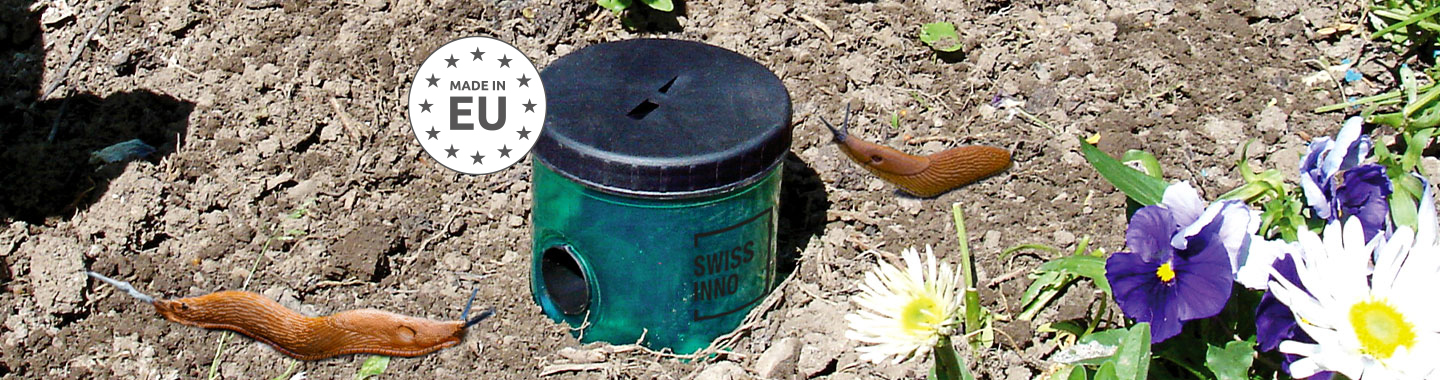
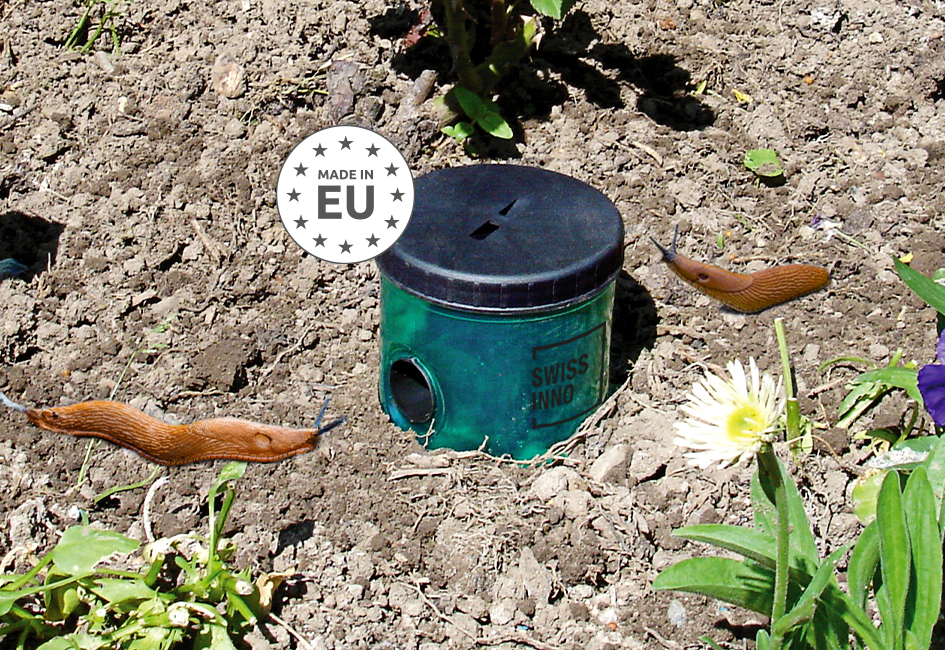


Effectively Control Slugs in Your Garden – Without Slug Pellets
Slugs and especially garden slugs can severely damage vegetable beds, raised beds and young plants within just a few nights. Chewed leaves, destroyed seedlings and slime trails are typical signs of a slug infestation.
The SWISSINNO Slug Trap provides a targeted solution for controlling slugs without poison or chemical agents. Instead of spreading slug pellets throughout the garden, the trap uses the natural attraction of slugs to beer.
Targeted Slug Control Where It Matters
While slug pellets are distributed over large areas, the slug trap works precisely where slugs are active. The attraction is controlled and localized – without chemical residues, without scattering granules, and without affecting soil quality.
Suitable for reducing slug activity in:
- Vegetable beds
- Raised beds
- Ornamental gardens
- Patio areas
- Lawns
A controlled, reusable and environmentally responsible solution for sustainable slug control.
A Proven Solution Against Slug Infestations
The SWISSINNO Slug Trap has been developed for long-term outdoor use and continuously refined to deliver reliable performance. It offers a simple and cost-effective method to reduce slug populations in gardens of all sizes.
In cases of heavy slug infestation, using multiple traps allows larger garden areas to be systematically protected and vulnerable plants to be safeguarded more effectively.
Whether for private home gardens or professional use, the slug trap enables efficient slug control without contaminating soil, plants or the surrounding environment.
Less plant damage. Healthier crops. Greater enjoyment of your garden.
How to use Slug Trap
1. Use beer as slug attractant.

2. Poor beer to the fill line.

3. Place traps around the edges of gardens. Bury traps deep enough so that the bottom of the entrance hole is even with the top of the soil.
Clean and replace bait when full or at least every 3 - 4 weeks (sooner in hot summer temperatures). Use more traps for better results.

1. Use beer as slug attractant.
2. Poor beer to the fill line.
3. Place traps around the edges of gardens. Bury traps deep enough so that the bottom of the entrance hole is even with the top of the soil.
Clean and replace bait when full or at least every 3 - 4 weeks (sooner in hot summer temperatures). Use more traps for better results.
How does the slug trap work?
The slug trap is filled with beer, whose scent attracts slugs. The slugs follow the smell and enter the trap. This allows you to effectively reduce slug populations in your garden without using poison.
Where can I use the slug trap?
Anywhere in the garden where slugs are a problem. If catches are low, try moving traps to new locations.
How do I install the Slug trap?
Bury traps around the edges of the garden. Place traps deep enough that the bottom of the entrance hole is even with the top of the soil. A couple drops of dish soap added to the liquid will help drown the without the use of poison.