

![[Translate to Czeck:]](/files/pics/7/2/csm_Mouse__860x586px_4295e63b71.jpg "[Translate to Czeck:]")
![[Translate to Czeck:] Ratten](/files/pics/0/9/csm_Rat__860x586px_e3e988d139.jpg "[Translate to Czeck:] Ratten")
![[Translate to Czeck:] Maulwurf](/files/pics/2/e/csm_Mole__860x586px_d43e7e8948.jpg "[Translate to Czeck:] Maulwurf")
![[Translate to Czeck:] Marder](/files/pics/d/6/csm_Marten__860x586px_7508da5714.jpg "[Translate to Czeck:] Marder")
![[Translate to Czeck:] Fliege](/files/pics/a/d/csm_Fly__860x586px_66c70bb32f.jpg "[Translate to Czeck:] Fliege")
![[Translate to Czeck:] indian-meal moth on oatmeal](/files/pics/b/6/csm_indian-meal-moth-on-oatmeal_low_659108f917.jpg "[Translate to Czeck:] indian-meal moth on oatmeal")
![[Translate to Czeck:] Schnecken](/files/pics/5/f/csm_Slug__860x586px_da4b2d7f83.jpg "[Translate to Czeck:] Schnecken")
![[Translate to Czeck:] Vogel](/files/pics/8/9/csm_Bird__860x586px_273b7ffaf9.jpg "[Translate to Czeck:] Vogel")
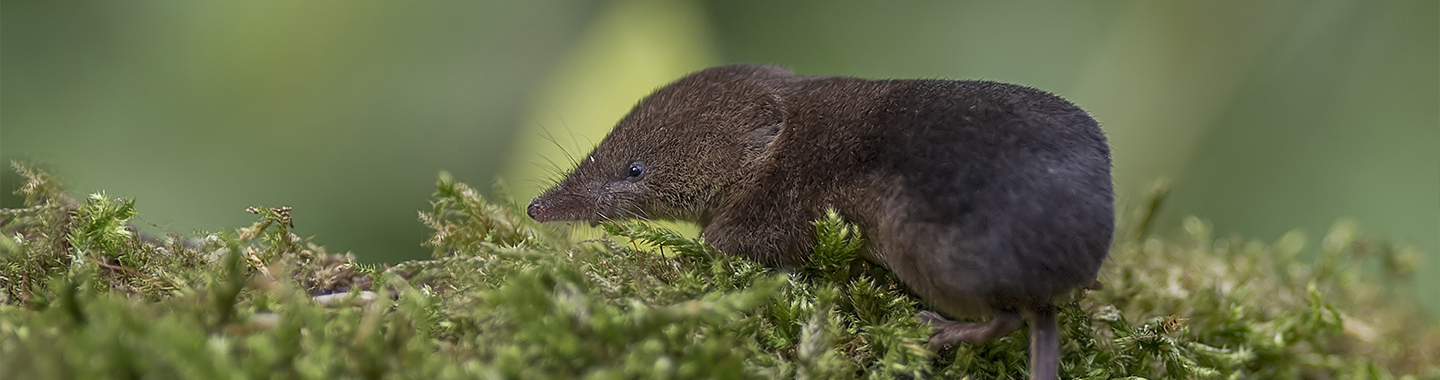
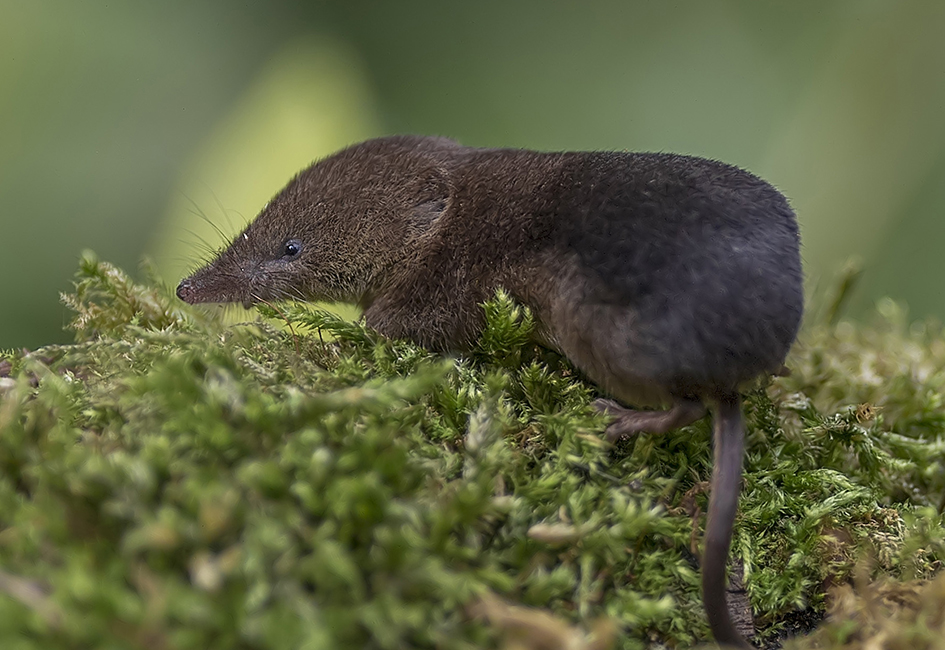
Habitat

Shrews are found in almost all areas of Europe.
They inhabit a variety of habitats: fallow land, meadows, hedges, field borders and roadsides, scree slopes, piles of stones, forest edges, dry stone walls, compost heaps and gardens. The greater white-toothed shrew and the lesser white-toothed shrew live in and near human settlements. In autumn, the animals increasingly migrate into buildings to spend the winter there.
They can be found in the following places inside buildings:
- Garages
- Garden sheds
- Basement rooms
- In hollow ceilings, walls and floors
- Corners of cluttered areas
- Beneath cabinets
- Under kitchen furniture and appliances
Lifestyle / behaviour
Shrews are among the smallest vertebrates or mammals. They are not actually mice, nor are they rodents. They are fierce predators comparable to bears or martens, only much smaller.
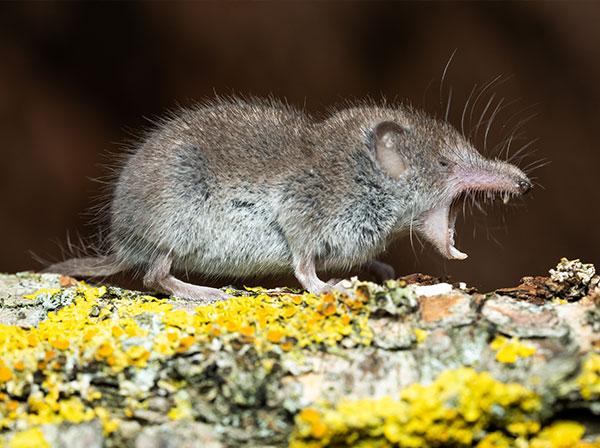
Angry shrew
Shrews are not very good climbers and move mostly on the ground.
Shrews are grumpy loners who only make contact with their peers during the mating season. They live in their own territory, which they mark with musky glandular secretions. The territories are 500 to 2000 m² in size.
Cats will hunt and kill shrews but will not eat them because of their musky odour and pungent taste. The smell is also clearly perceptible to humans. Birds are not bothered by the smell of shrews but like to catch and eat them.
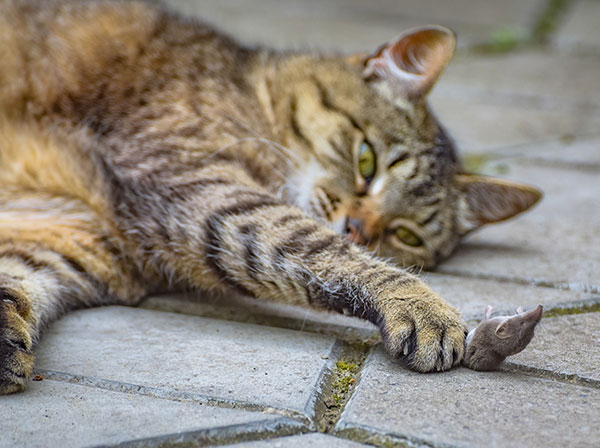
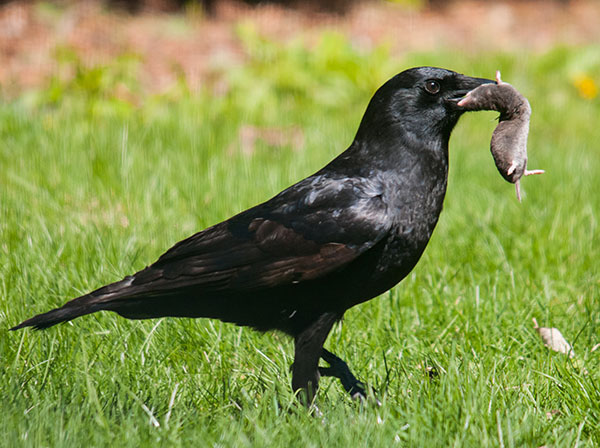
A cat playing with a dead shrew. Crow with shrew
The organism of shrews runs at full speed. Under stress, their heartbeat can increase to 1200 times per minute. They must go in search of food every 1 to 2 hours and are therefore diurnal and nocturnal. These circumstances make it difficult to catch the shrews with live traps!
Outdoors, nests are built in crevices, burrows, or under rootstocks. In some cases, passages are also taken over by moles or voles. The spherical nests are built from shredded leaves and grass.
Shrew families form caravans in which the shrew at the back bites the fur next to the base of the tail of the shrew in the front. The mother animal is at the very front. With this behaviour, stray young animals are brought back to the nest or the entire family moves quickly and safely to another place in this way. This behaviour is specifically taught to the young by the mother. The female runs over to the young animal and then stops in front of it so that it attaches itself. Young animals that do not attach themselves are transported quite roughly by mouth. As the young become more experienced, loose contact by using the snout or whiskers to the back of the shrew in front, without biting, is enough to form a row. Caravans can also be formed in two or three rows, or young animals can also form such caravans without their mother.
Shrews don't see very well, but they do have a highly developed sense of smell and can hear sound well into the ultrasonic range. Like bats, they can use echolocation to perceive their surroundings.
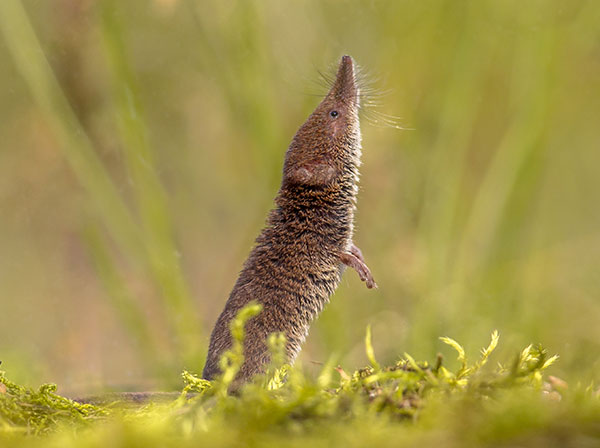
Typical position of the shrew to explore its surroundings. The nose "sees" more than the eyes.
Nutrition
Shrews are agile hunters who feed primarily on small animals such as insects, spiders, woodlice, snails, earthworms, centipedes, and millipedes. In addition, smaller amounts of plant-based food such as seeds and nuts are eaten. In buildings, they also eat cheese, milk, meat, bacon, chocolate, fish, and oil.
5 to 10g of food are required daily. Water is mostly taken from food.
Shrews have an exceptionally high metabolic rate and therefore have immense food requirements. Their food intake can be in the range of their own body weight per day. Shrews will starve to death within a few hours if they do not eat anything. As a protective measure in the event of a lack of food, they can become rigid (torpor) for a few hours. Here body temperature, heart rate and respiration, and thus energy requirements, are reduced. Their body temperature goes down to 18°C, but can rise back to a normal 38°C within a few minutes.
To get through the winter, shrews not only break down fat tissue, their organs, brain, muscles, and even the skeleton shrink by up to 20%. The consumed body tissue provides energy and, at the same time, energy consumption decreases due to reduced body mass. In spring, when more food is available, the body is restored again.


Facts
- Scientific name: Soricidae
- Other names: shrews
- Colour: upper side varies depending on species, yellow-brown, grey, brown to black; The bottom parts are lighter in colour.
- Weight: 4 – 15 g
- Body length: 5 – 8.5 cm
- Tail: thick, hairy, noticeably shorter than the body, 25 – 45 mm
- Body: small head, slender body and long snout
- Ears: small, hairy, the ears hardly protrude above the hair on the head
- Eyes: tiny
- Life expectancy: 1 – 2 years
- Faeces: thicker and longer than house mouse faeces, 12 mm long, consists mainly of pieces of insect shell, is not as compact as house mouse faeces and is easily crushed
Some authors portray shrews as beneficial because they eat many garden pests such as snails and grubs, among other things. But they also eat many useful animals, such as earthworms and spiders. In any case, shrews are not pests in their natural habitat and leave hardly any visible traces outdoors.
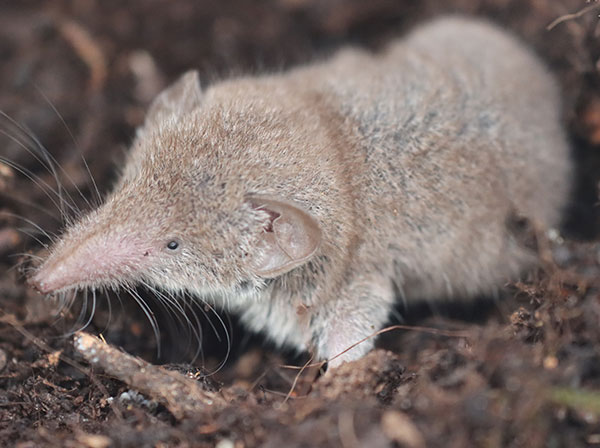
Young shrew
Especially from autumn onwards, they enter buildings to hibernate and become a nuisance there. In contrast to mice, of which several animals often migrate, shrews are usually single animals or at most a pair. For this reason alone, damage caused by shrews in buildings is limited. They become noticeable through running noises, faeces, and the smell of urine. Due to their high metabolism and food turnover, they produce more urine and faeces than real mice.
Shrews can spoil food and feed directly by eating it, or by contaminating it with saliva, urine, faeces, and hair.
Shrews do not have incisors, they have predator teeth. Damage through gnawing on materials or objects can only be blamed on shrews to a very minor extent when they gather nesting material.
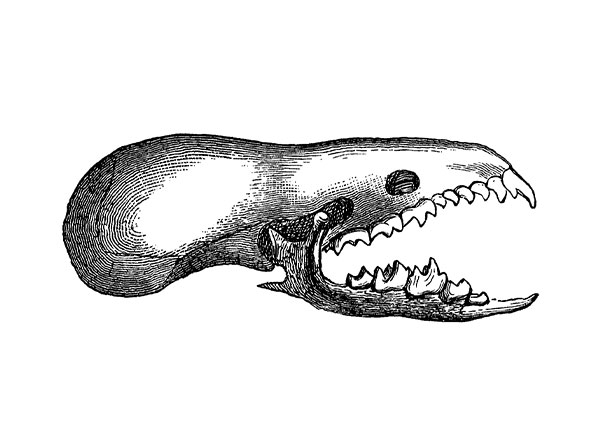
Skull and teeth of a shrew
Shrews do not pose a risk to health. Shrews infecting people with pathogens have not been reported. In recent studies, the Hant virus and Borna virus have been found in shrews. However, whether these are actually transmitted to humans has not yet been clarified. Shrews can carry fleas, ticks, or mites in their fur and can also bring them into buildings.
Management and control measures
Protection status: Greater white-toothed shrews, lesser white-toothed shrews and bicoloured shrews are not rare or endangered species. However, in some countries, such as Italy and Germany, they are legally protected.
Prevention
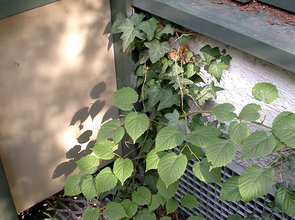
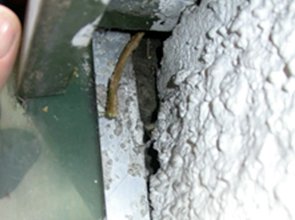
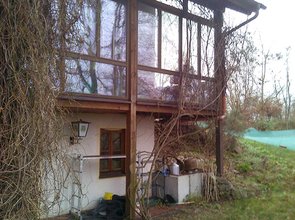
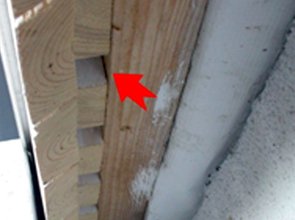
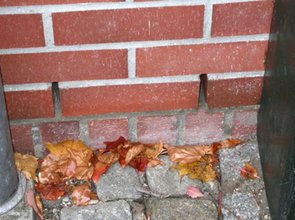
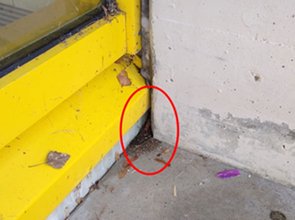
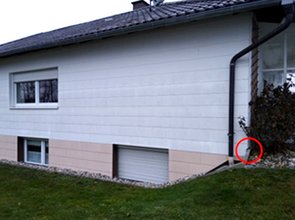
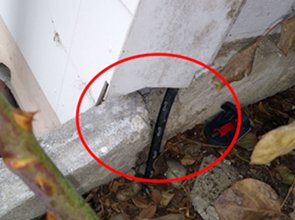
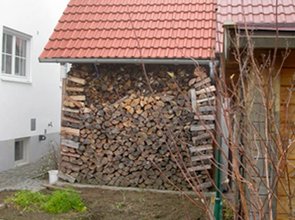
The best time to take action against shrews is in autumn, when the crops have been harvested and the cold, wet weather sets in. The pests leave their summer quarters and look for dry and warm winter- shelter in and on buildings. It is best to catch or drive away the shrews before they become ensconced in buildings.
Shrews need an opening of only 4-5mm diameter to gain entry so there are often many access points around the perimeter of a building. They penetrate mainly through open or poorly closing doors and gates, and through basement windows, lighting shafts, pipe ducts, cable ducts, cooling and ventilation systems, outdoor lights, transformer stations, switch boxes and other apertures in outer walls. If possible, access points should be sealed to prevent future infestations. SWISSINNO Rodent Stop Steel Wool is a quick and easy fix to plug wall openings, holes and cracks.

Shrews are not good climbers, but they are perfectly capable of getting into storage areas. Planted facades, wood cladding and insulation offer ideal climbing aids.
Eliminate nesting possibilities to discourage shrews from colonising the site. Get rid of piles of wood stacked against house walls, and of bulky rubbish on the site, and of dense ground-covering vegetation to make the area unattractive for nesting.
Remove all food sources and avoid excessive bird feeding. Store foodstuffs, pet food and seeds in rodent-proof containers and not in bags or boxes.
Ultrasonic rodent repellers

Ultrasonic rodent repellers are an effective way of scaring away shrews and preventing them from entering buildings. With SWISSINNO devices, the high-frequency sound is constantly changed to prevent the animals from getting used to the sound.
It is important to note that ultrasonic frequencies do not travel through walls, so at least one repeller must be placed in each infested room.
Ultrasonic repellers are not completely effective on their own. For maximum control they should be incorporated into an integrated pest management strategy comprising mechanical traps with food deprivation, sanitation and the closure of access routes.
Trapping

Traps are the most effective way to control pests in a non-toxic and humane manner.
Shrews are not afraid of traps and are easy to catch. Trapping works in the same way as with house mice, and the same baits can be used. But shrews are about half the size and weight of real mice. In principle, they can be caught with all regular mouse traps. Due to their small size and low weight, however, bad catches or catches that make the animals suffer are more common.
SWISSINNO recommends the PRO SuperCat mousetrap for catching shrews. With its patented trigger, it is effective and at the same time animal welfare-friendly, even with smaller shrews.
You can also catch shrews with live traps. Since they are very sensitive to stress and lack of food, the traps must be closely monitored. Traps should be checked every 2 to 3 hours. The caught shrews can be released in a suitable biotope one to two kilometres away.
The following SWISSINNO traps are convenient to catch shrews:
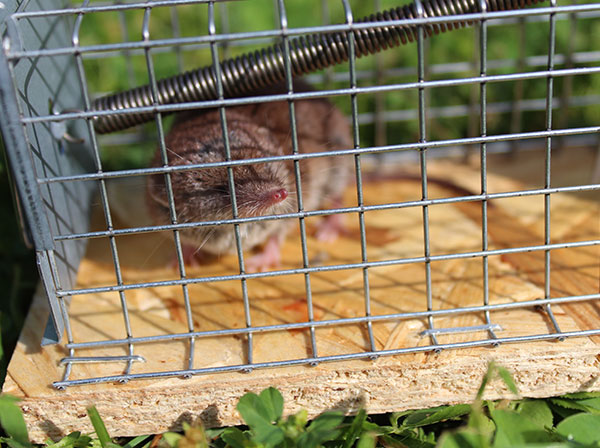
The SWISSINNO classic mouse cage is ideal for catching shrews alive thanks to its sensitive trigger.
Mouse trapping: How to go about it:
- Before setting out traps, clean up the area removing all tracks, faeces and urine. This will disturb and disorientate the mice and make them less suspicious of the traps. It also helps to see were latest rodent activities took place.
- Remove all food and food sources. The hungrier the mice, the more readily they will accept the traps.
- Mice learn quickly from trap failures. A bad trap often does not make a complete catch but injures the animal and causes it to suffer and to become trap-shy. Only high-quality traps like SWISSINNO mousetraps are effective and suitable for animal welfare.
- Always check traps for proper function before use, especially for sensitive triggering and good spring tension. Don´t use traps that don’t set correctly or that fail to snap shut properly.
- Wear gloves during trapping. That’s not because of the smell of humans. Rodents in and around buildings are not shy about humans´ smell. The use of gloves is recommended for hygienic reasons as rodents, dead or alive, can transmit serious diseases via contact with their fur or body fluids.
- Good trap placement is the key to successful trapping. Set traps in areas of high rodent activity. Traps should be placed in the runways of the rodents. Mouse droppings and smear marks are good indicators. Traps are set best along walls or in corners and not in the middle of the room.
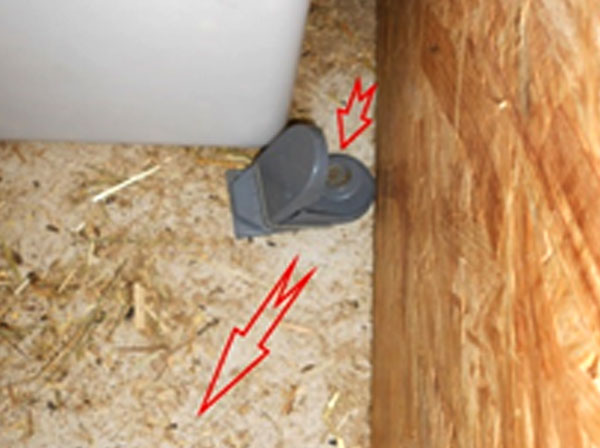
Optimal placement of the trap into a runway
- Traps must sit firmly on the ground. Rodents shy off from traps that move or make sounds when touched. A secure position is also important for a clean strike and preventing failures.
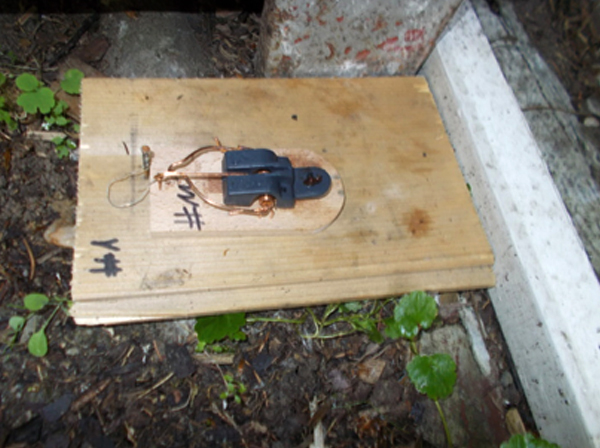
Trap set on a board to give a good standing and fixed with a wire so it can't be dragged away.
- It is better to set out more than a single trap, even if you think, that there is only one mouse present. If there are more mice, several traps should be set out anyways. The distance between traps should be no more than 5m.
- If pets have access to the trapping sites, or when setting traps outdoors, the traps should be covered or placed in trap tunnels. This keeps non-targeted animals off the traps. The Mousetrap “No See-No-Touch” with its integrated tunnel is safe and does not need additional cover. The Mousetrap PRO SuperCat with patented trigger system is selective and helps avoid killing non targeted animals.

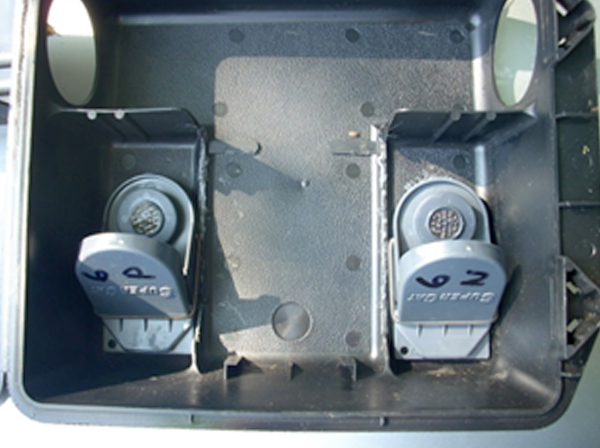
Traps set in a box to keep away non targeted animals and prevent trap loss.
- Traps should be secured with a wire or cord to prevent loss. Caught mice can carry away the trap before they die. Outdoors predators often carry away caught rodents together with trap.
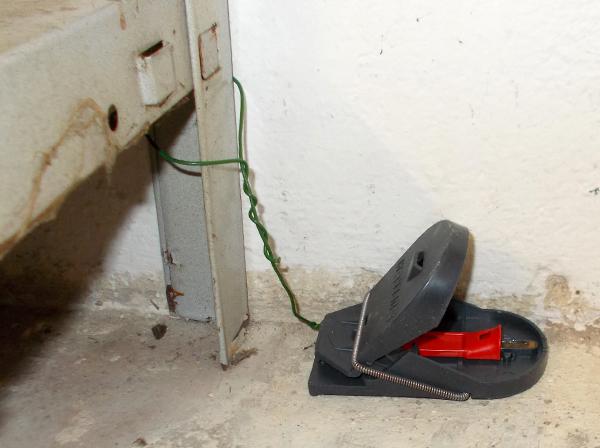
- Set traps must be checked daily. Carcasses should be disposed of before they become a hygiene problem. In case of an incomplete catch foul catch (not lethal) the animal must be dispatched. Traps that have been ignored should be moved to a different pposition. If needed, traps should be rebaited respectively reset. Non-targeted animals should be released, provided that they are not injured.
- If traps are found tripped but empty. (failed catches), it is recommended to switch to a different model of trap. The best trap for mice is the Mousetrap PRO SuperCat. With this model, no failures or imperfect catches occur.
- Most SWISSINNO Mousetraps are baited with peanut butter. Replacement bait syringes are available separately. The range of attractive of this bait is not more than 2 meters and rodents will not be lured from further away or from the exterior of the building.
- “Prebait”: If a trap is being ignored, placing a small amount of bait, no more than pea-size, in front of the trap may help.
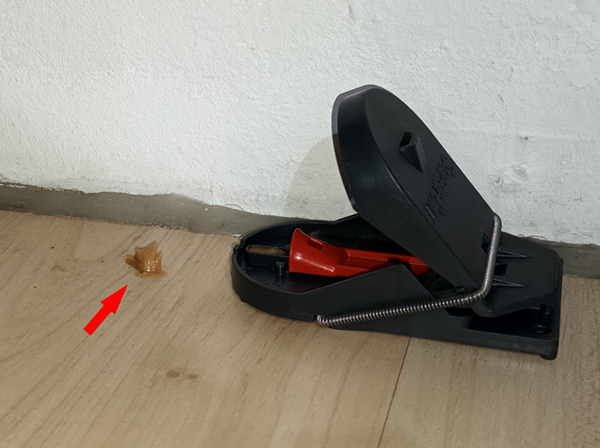
Mouse trap with small portion of peanut butter as “prebait”
- If the peanut butter baited traps do not work, try a chocolate spread like Nutella instead. Nutella is an excellent alternative.
- The smell of a dead mouse from previous catch does not repel mice. In fact, used traps are more attractive to them. If traps need to be cleaned, use warm water only with a soft brush and not detergent.
- Catch alive traps should be checked every 4 hours. Otherwise the stress can kill the captive rodent. Caught live mice must be released at least 2 km away, otherwise they will find their way back.
- If there is evidence of the presence of species which are protected by law, it is recommended to contact local authorities before starting control measures. Already active measures would have to be stopped immediately until approved. Even the use of “catch alive” traps without authorisation represents an infringement.
Poison bait
In Europe, no poison bait is approved for controlling shrews. Regardless of this, it is better to use traps to fight shrews anyway. SWISSINNO advises against using toxic bait for several reasons:
- Toxic baits endanger the environment, children, pets, domestic, farm and other non-target animals.
- Poison baits cause the slow and painful death of rodents. After consuming such bait, it takes several days for the animal to die.
- When using poison bait indoors, the rodents often die in inaccessible places and the dead bodies cannot be disposed of. They decompose and give off strong, unpleasant odours that last for weeks. Later the dried-up carcasses serve for years as food for other pests such as flies, moths, and beetles.