
![[Translate to Russia:]](/files/pics/7/2/csm_Mouse__860x586px_4295e63b71.jpg "[Translate to Russia:]")
![[Translate to Russia:] Ratten](/files/pics/0/9/csm_Rat__860x586px_e3e988d139.jpg "[Translate to Russia:] Ratten")
![[Translate to Russia:] Maulwurf](/files/pics/2/e/csm_Mole__860x586px_d43e7e8948.jpg "[Translate to Russia:] Maulwurf")
![[Translate to Russia:] Marder](/files/pics/d/6/csm_Marten__860x586px_7508da5714.jpg "[Translate to Russia:] Marder")
![[Translate to Russia:] Fliege](/files/pics/a/d/csm_Fly__860x586px_66c70bb32f.jpg "[Translate to Russia:] Fliege")
![[Translate to Russia:] indian-meal moth on oatmeal](/files/pics/b/6/csm_indian-meal-moth-on-oatmeal_low_659108f917.jpg "[Translate to Russia:] indian-meal moth on oatmeal")
![[Translate to Russia:] Schnecken](/files/pics/5/f/csm_Slug__860x586px_da4b2d7f83.jpg "[Translate to Russia:] Schnecken")
![[Translate to Russia:] Vogel](/files/pics/8/9/csm_Bird__860x586px_273b7ffaf9.jpg "[Translate to Russia:] Vogel")
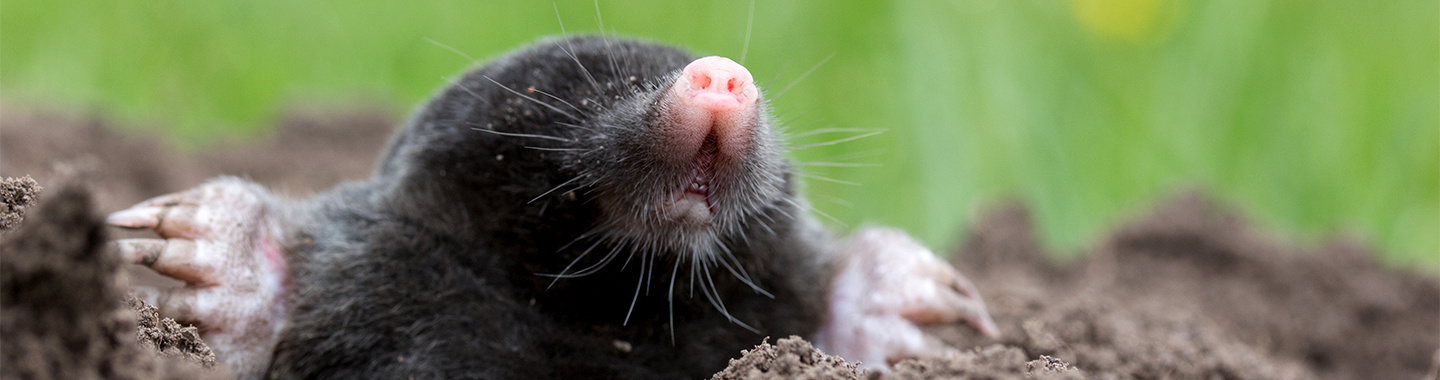
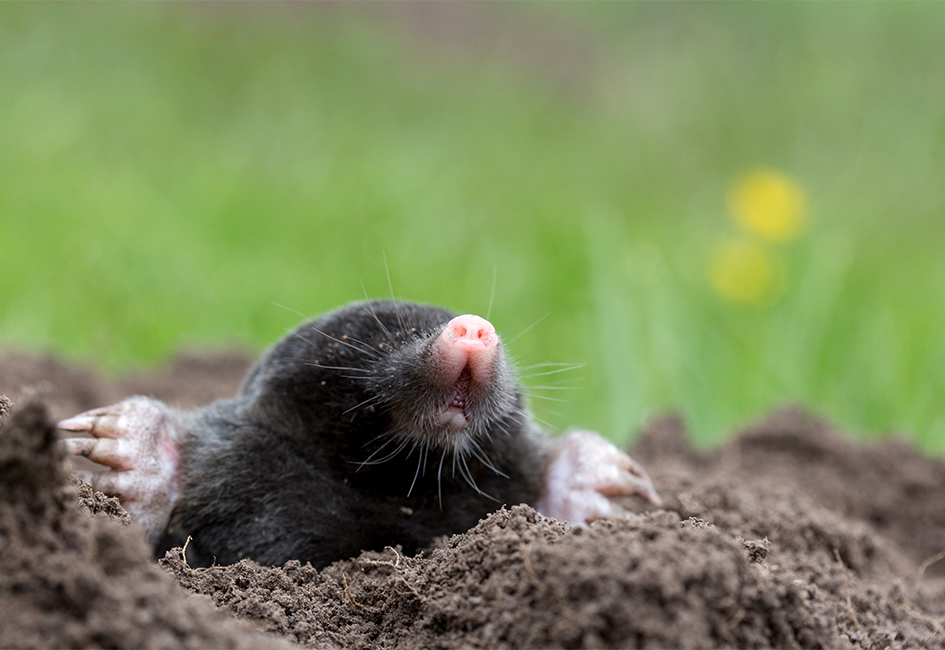
MOLE
Habitat
The mole is found in Europe in the temperate zones. It is absent in the polar and subpolar regions, in very dry areas and in the high mountains.
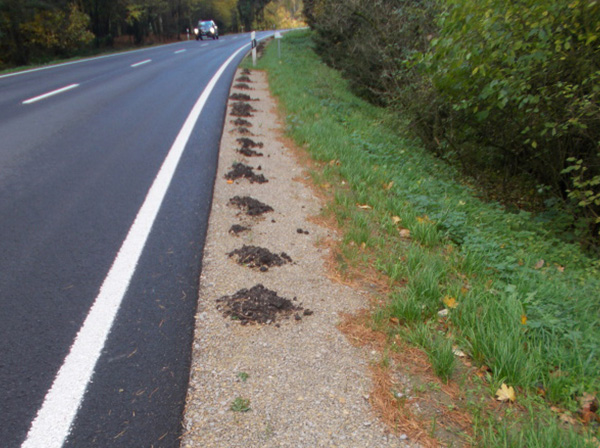
Moles need deep soils that are rich in soil life and in which tunnels can easily be created. They colonise forests, meadows and pastures, fallow land, field margins, wetlands and bogs. Agricultural areas with intensive soil cultivation are avoided. In the vicinity of humans, moles are found in parks, gardens and lawns, but also e.g. in roadside ditches.
Lifestyle / Behaviour
Moles are not rodents but predators and, like hedgehogs and shrews, are insectivores. These small mammals live almost exclusively below the earth's surface in their self-dug tunnel system.
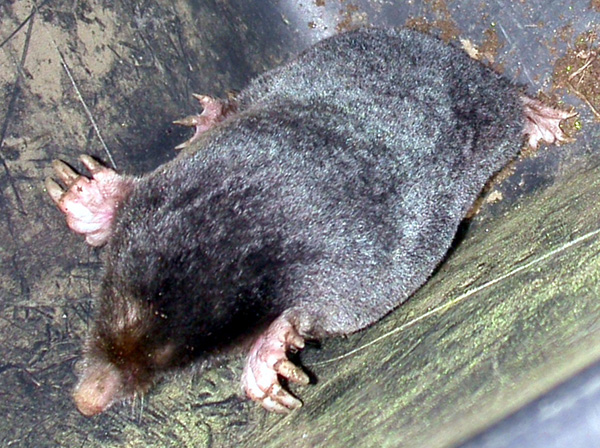
Their bodies are particularly well adapted to digging tunnels and living underground. The bones of the hands, arms and shoulders, as well as the associated muscles, differ greatly from the usual quadruped physique. Particularly striking are the digging hands, which seem to have grown directly on the body without arms. Equipped in this way, they can dig up to 30m of tunnel per day. Their blood can transport oxygen better than that of species living above ground. This allows the mole to breathe air that contains little oxygen and a lot of carbon dioxide. Its velvety fur has no fixed direction, this gives the mole the ability to easily move in either direction in the narrow tubes.
in the narrow tubes. Its sense of smell, touch and hearing are very highly developed. With their snouts, moles can even sense the weak electrical impulses of prey's muscles. On the other hand, they cannot see very well.
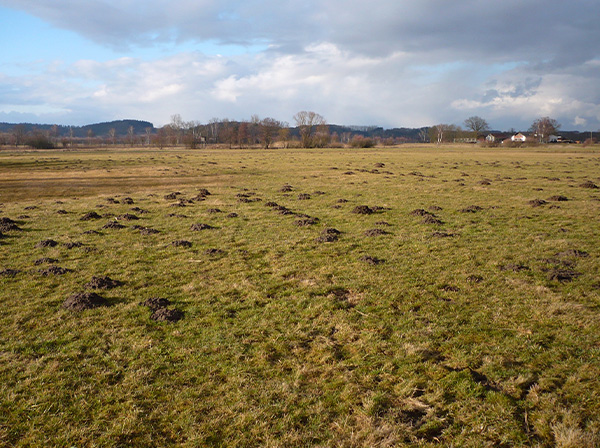
The tunnels form a complex network that extends over an area of several hundred to over 2000 square metres. The territory size depends mainly on the amount of earthworms in the soil. The total length of the tunnels can reach 500 metres. The mole brings the spoil from tunnel construction to the surface and deposits it as molehills. Close to the surface, at a depth of 5 to 15 cm, where most prey are found, are the hunting tunnels. From here, tunnels lead to the deeper areas, where nest and storage chambers are located at a depth of up to 80 cm. The nest chambers are padded with grass and leaves. In the storage chambers, the mole stores "stunned" earthworms. To prevent them from escaping, the mole bites off their heads. Hundreds of earthworms with a total weight of over 1.5 kg can be stored here for the winter.
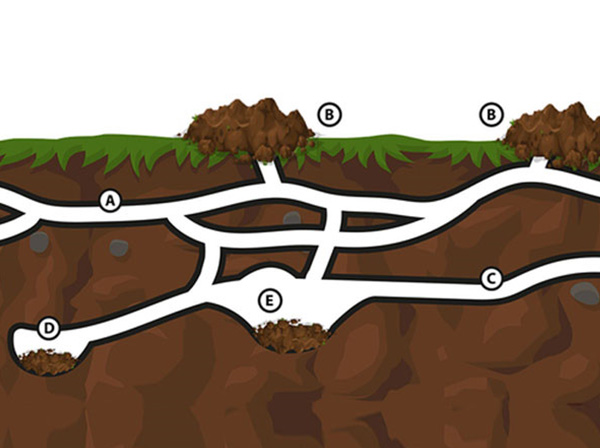
In places with a high water table, where it is not possible to build the nest chambers at a frost-proof depth, the mole builds large "castles". These are particularly large and high piles, visible from afar, under which the nest is then located. The thick layer of earth above the nest provides insulation in winter.
Mole tunnels are transverse-oval, about 6cm wide and 4cm high. Especially the hunting and exploration tunnels are advanced quickly but rather sloppily. Roots hang from the ceiling and loose soil lies on the passage floor. Deeper and frequently used tunnels are smooth and clean.
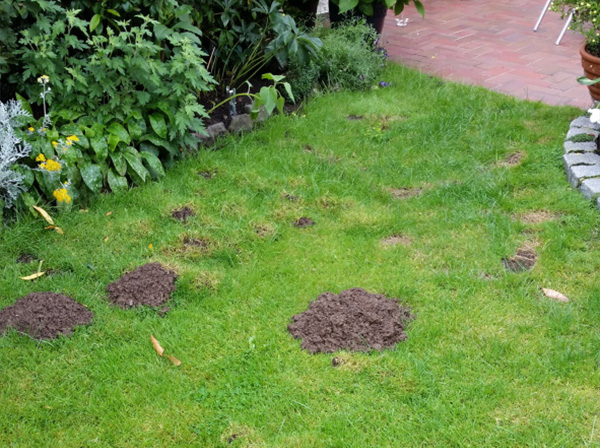
When tunnelling in solid earth and deeper layers, the earth is loosened with the digging hands and scraped backwards. For removal, the mole turns around and pushes the earth as a plug with its front legs and heads through the tunnel to an exit outside. The plug of soil can weigh up to 10 times as much as the mole itself. The ejected plugs of earth then gradually forms a molehill of coarse clods of earth. A mound is typically 30-50cm in diameter and consists of up to 8kg of soil. In the middle of a mound there is always a steep passage leading down to the horizontal tunnels. Above horizontal tunnels, molehills are located at regular intervals and mark the underground course.
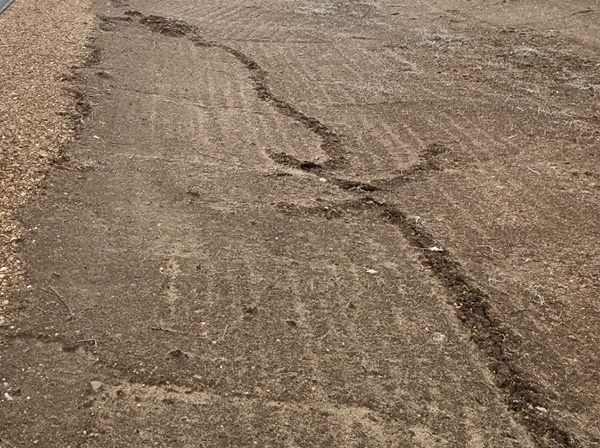
In very loose soil, the mole can simply push the soil to the side and up or down without removing the soil from the passage. To do this, the roof of the tunnel often bulges upwards and the course is clearly visible from above.
Moles live in their tunnels in the dark largely independent of the position of the sun above ground. The mole has 3 activity phases of about 4 hours per day. The rest of the time it sleeps. The tunnel system is also walked every 4-5 hours. Moles are active all year round, even in winter. From autumn onwards, worms and insects retreat to frost-protected deeper layers. The moles follow them and also burrow deeper into the ground. In spring, prey and moles migrate back to the upper layers of soil. Accordingly, there is increased burrowing activity among moles in autumn and spring and more mounds are raised.
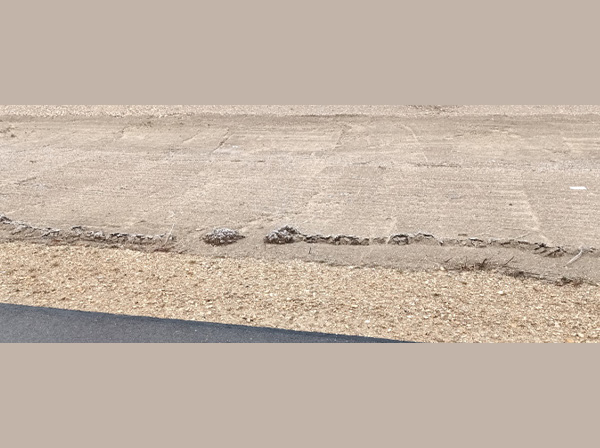
Mole burrows often follow structures such as house foundations, perimeter walls or paths.
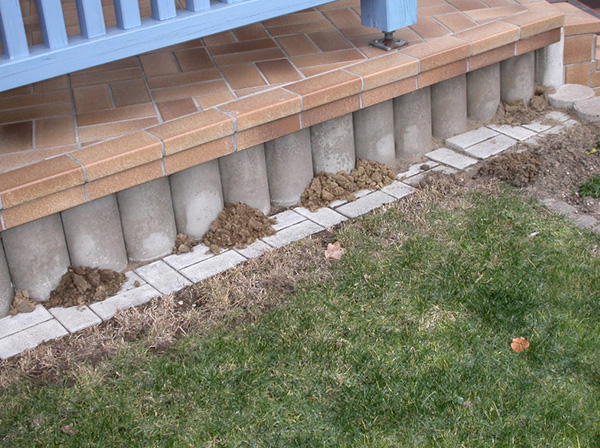
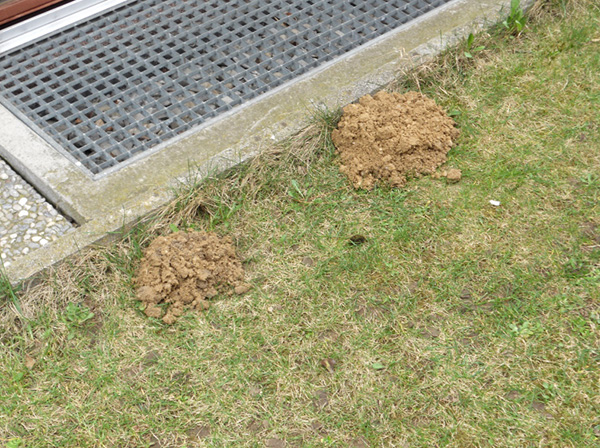
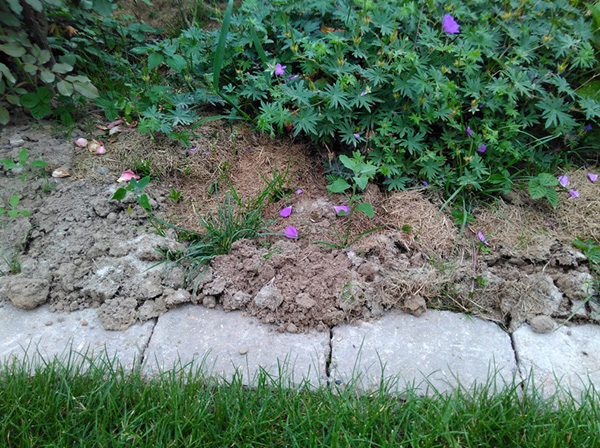
The mole normally keeps its tunnel system closed, open holes are rare and are usually due to mice that have colonised tunnels abandoned by the mole.
Moles live as grumpy loners who defend their tunnel system very aggressively against conspecifics and other intruders. Neighbouring territories overlap only at the edges, the neighbours know each other, communicate and usually also respect each other's territorial boundaries. To avoid direct encounters and fights, animals with overlapping territories have slightly staggered activity times. Communication takes place via scent marks, but also acoustically over greater distances. For example, the cries of a mole cruelly caught in a trap cause trap shyness in surrounding animals within a radius of several hundred metres. Males and females only meet during mating season.
The dispersal of the moles into new territories takes place in the near vicinity underground with exploratory tunnels, but also above ground. The above-ground migrations take place at night, often during rain, and longer distances of over 1km can be covered.
Natural enemies:
The mole's enemies include birds such as owls, birds of prey, corvids and storks, as well as snakes, stoats, foxes, martens, wild boars, dogs and cats. Dogs and cats catch moles for the pleasure of hunting, but do not eat them because of their strong taste.
Nutrition
Moles are predators and have an enormous appetite. They need about 70 -90 % of their body weight a day in the form of meat. A mole starves to death after only one day without food. Their main food is worms. They also eat snails, insects and their larvae and spiders. But baby mice, snakes and other small animals can also be part of its diet. Very rarely it also eats underground plant parts, possibly like dogs and cats do, to aid digestion.
To search for food, they dig in the upper humus layer and walk the tunnels.
Moles do not drink, their food contains enough moisture.
Reproduction
The otherwise solitary moles only meet during mating season. For this, the males sometimes leave their burrow and undertake longer, often above-ground migrations. Interestingly, the females are hermaphrodites and have ovaries and testicles combined in one organ. The ovary is more active during the reproductive period, the testis the rest of the time. It is thought that the high testosterone levels outside of the mating season help with tunnelling. Moles reproduce only once a year. The young are born in spring. The females raise the young alone. After about 6 weeks, the young leave the mother's burrow and have to find their own territory. These migrations take place above ground and are very dangerous for the young moles. To protect themselves from predators, they migrate during dark rainy nights. The rain also helps because tunnels are easier to dig in damp soil. The moles do not become sexually mature until the following year.
- Breeding season: Spring
- Gestation period: 28 to 50 days
- Litter size: 1 - 9 young per litter
- Number of litters: once a year
- Sexual maturity: after one year
Facts
- Scientific name: Talpa europaea
- Other names: Mole, Shear
- Colour: dark grey to black
- Weight: 80 g - 140 g (males are larger than females)
- Body length: 13 cm - 16 cm
- Tail: 2.5 cm - 4.0 cm, covered with few tactile hairs
- Body: Cylindrical, with short neck, tapering head, short tail and velvety coat.
- Feet: shovel-like forelimbs with strong claws
- Ears: Very small ears
- Eyes: Very small eyes
- Lifespan: 3 to 6 years
Manifestations and damages
Moles are often presented as "beneficial insects" because they loosen, mix and aerate the soil. They exterminate unwanted pests such as grubs, snail larvae and slugs. However, the main food of moles consists of earthworms, which are actually important for soil structure. They also favour the colonisation of various animal, fungal and plant species both above and below ground by creating tunnels and piles. It is also true that moles - in contrast to voles - cause practically no feeding damage to plants, as they eat almost exclusively animal food. Nevertheless, considerable damage can occur in connection with mole infestations.
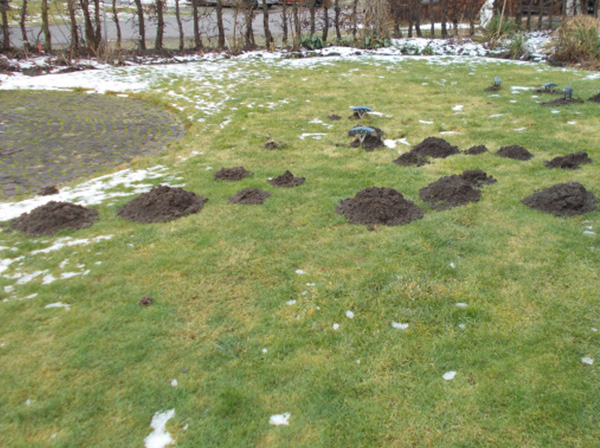
If anything distinguishes the mole, it is its manic burrowing instinct. The annual work of a mole can amount to a tonne of excavated earth. This leaves clear traces in the affected areas. Moles create extensive networks of hunting tunnels underground in search of food. As described earlier, these tunnels, which run close to the surface, visibly bulge upwards. Turf becomes uneven and you sink in when walking over it. For deeper tunnels, the mole must move soil upwards and deposit it in the form of molehills.
- On well-maintained or elaborately designed park and garden areas, the visual damage is understandably a thorn in the side of many owners.
- Hills and walkways are trip hazards and pose a certain risk of injury, e.g. on sports fields (football, golf) or for older people.
- Voles and field mice like to settle in abandoned mole tunnels and subsequently cause considerable damage to the planting. Earth wasps use mole tunnels for nesting. These are all pests that you do not want in your garden.
- The piles are not only unsightly, they make mowing difficult and cause damage to mower decks. Robotic lawnmowers also have a hard time with the bumps and mole piles.
- Particularly problematic for farmers: soil from the heaps gets into the grass during mowing and interferes with ensiling, reduces fodder quality and can lead to the spread of diseases such as listeriosis and botulism in cattle, sheep and horses.
- Disturbing plant growth by burrowing under and damaging the roots
- Disturbing piles of earth and mounds in garden beds
- The main food of moles consists of earthworms, which are important for building up the soil.
- Undercut footpaths or pavements sag.
- Damage to grass runways and rollover areas around tar-gravel runways
- Erosion damage to dams, dikes, slopes, embankments and coastal protection structures as a result of burrowing activities. Animals like the mole that damage dams are considered enemies of the state in the Netherlands and are consistently combated.
- Damage to underground installations such as cables, pipes or security systems.
- Disturbance of archaeological layers
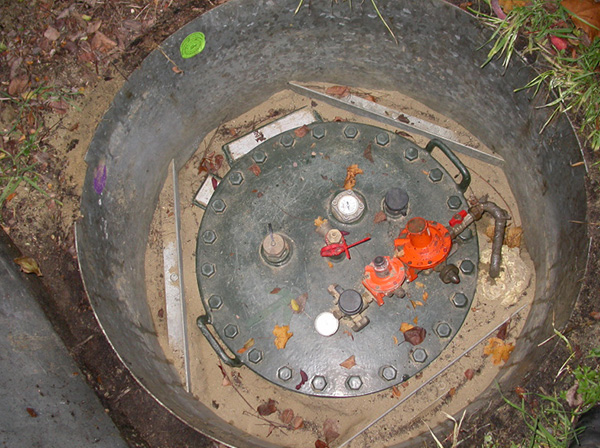
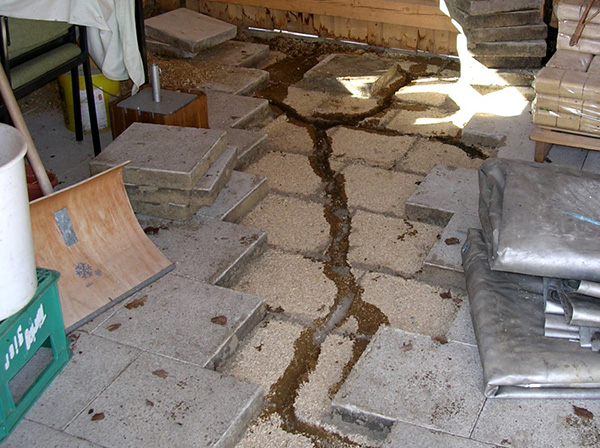
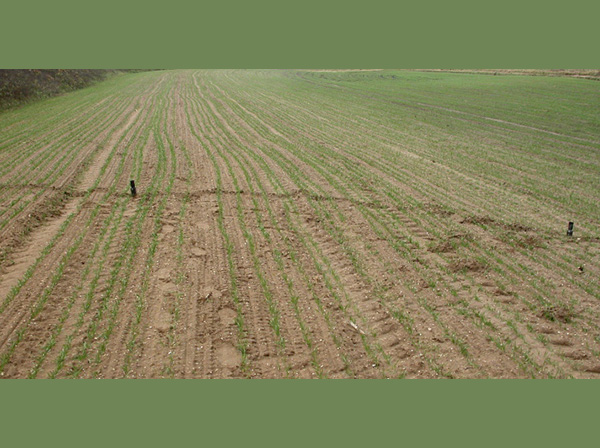
Mole activity in a freshly sown field. The displacement and mounds damage the seedlings, which are particularly sensitive at this stage. This can subsequently lead to yield losses.
Basically, moles are infested with a whole range of worms and parasites. Fleas, mites and ticks can be found in mole nests. However, moles are not known to be carriers of disease. Nevertheless, as with all other wild animals, unnecessary skin contact should be avoided. Therefore, gloves should always be worn when trapping and hands and arms should be washed thoroughly after work.
Management and control measures
Protection status: Moles are protected in Germany and Austria. They may neither be caught nor killed there. However, chasing the animals away, e.g. with acoustic chasers or scents, is permitted.
Prevention
There are only a few possibilities that prevent or make it more difficult for moles to settle.
- On agricultural land: install perching crutches and nesting boxes for birds of prey.
- Do not hunt predators such as weasels, stoats, martens and foxes, but encourage them with nest boxes and hiding places.
- Shrubbery, undergrowth and overgrown groves offer moles protection from predators and should be kept as short as possible.
- Water your garden less. Moles like soft, moist soil because it is easier to dig through, and moist soil is also home to more worms and insects. Thorough watering once a week should be enough to keep your lawn healthy and at the same time reduce the food supply for the moles.
- Earthworms are the main food of moles. Moles only dig where there are sufficient earthworms. Earthworms do not like acidic soils with pH values below 4.5. By applying acidic fertiliser, the living conditions for earthworms and moles can be unfavourably influenced. But not all plants tolerate acidic soils. At least for lawns, alkaline fertilisation is better for pushing back moss and weeds. Not an easy choice!
- Protective fences: Moles mainly migrate above ground. A fence, e.g. with a grid of approx. 15 mm mesh size, can keep them out. The fence must be buried 60 cm deep, 20 cm high and kept free of vegetation. Such fencing is also effective against voles and field mice. A property fence made of concrete or stones is also effective.
- Geotextiles: Especially interesting for the creation of new gardens. A special fleece is laid on the prepared garden surface, after which e.g. rolled turf is laid. Moles cannot live in the thin layer of turf. Nor can they live under the fleece, without access to the surface. The robust fabrics are durable for decades and protect areas very effectively from moles.
Acoustic repellents


Sound waves and vibrations disturb moles and can drive them away from their territory. Acoustic animal repellers are a wildlife and environmentally friendly way to prevent moles from entering the garden. The waterproof SWISSINNO solar mole repeller has a large range of 650 m². The integrated solar cell, together with the device's rechargeable battery, ensures 24-hour continuous operation. The repeller is effective against both moles and voles.
A 100% guarantee of success cannot be given with this method. It is a gentle procedure, The animals always have the possibility to stay despite the disturbance. Various reasons can lead to a reduced effect: For example, habituation may occur, individuals may have poor hearing or simply do not feel disturbed, or there is no suitable alternative territory. Very light, sandy or dry soils transmit sound poorly.
Trapping


Moles have been hunted for a very long time, not so much for the damage they cause, but for their velvety fur. About 2000 of the little furs were needed for a decent "Mole Skin" coat. Traditionally, moles were caught in the last centuries, mainly with traps.
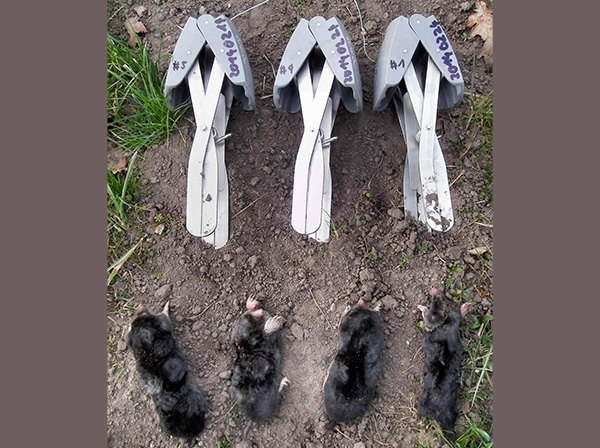
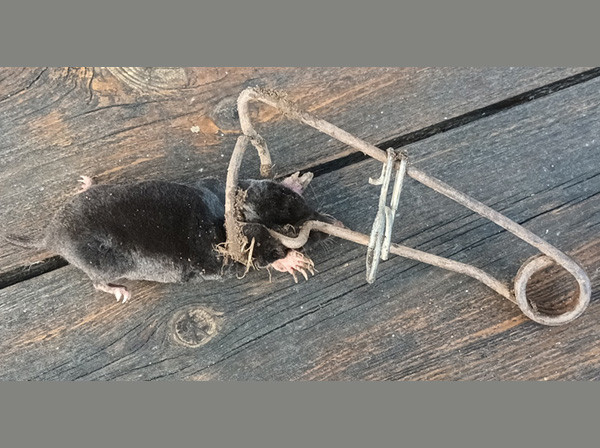
Unlike rodents such as mice, rats, field mice and voles, moles are only single or few animals. Normally, only one mole lives in a normal house garden. Often a mole's territory even extends over several neighbouring gardens. As a reminder, they are grumpy loners with reveries up to 2000m2 large. Therefore, control with traps is particularly effective because you cover a large area with just a few traps.
Impact traps are an efficient, sustainable and environmentally friendly method of controlling moles. SWISSINNO recommends the Mole Trap SuperCat. This high-quality trap is very easy to use, lasts for many years, catches moles from both directions of travel and is harmless to users and pets. The traps are placed in the mole hole. As soon as a mole tries to walk through the trap or presses the trigger, the trap is triggered and the mole is killed.