
![[Translate to Russia:]](/files/pics/7/2/csm_Mouse__860x586px_4295e63b71.jpg "[Translate to Russia:]")
![[Translate to Russia:] Ratten](/files/pics/0/9/csm_Rat__860x586px_e3e988d139.jpg "[Translate to Russia:] Ratten")
![[Translate to Russia:] Maulwurf](/files/pics/2/e/csm_Mole__860x586px_d43e7e8948.jpg "[Translate to Russia:] Maulwurf")
![[Translate to Russia:] Marder](/files/pics/d/6/csm_Marten__860x586px_7508da5714.jpg "[Translate to Russia:] Marder")
![[Translate to Russia:] Fliege](/files/pics/a/d/csm_Fly__860x586px_66c70bb32f.jpg "[Translate to Russia:] Fliege")
![[Translate to Russia:] indian-meal moth on oatmeal](/files/pics/b/6/csm_indian-meal-moth-on-oatmeal_low_659108f917.jpg "[Translate to Russia:] indian-meal moth on oatmeal")
![[Translate to Russia:] Schnecken](/files/pics/5/f/csm_Slug__860x586px_da4b2d7f83.jpg "[Translate to Russia:] Schnecken")
![[Translate to Russia:] Vogel](/files/pics/8/9/csm_Bird__860x586px_273b7ffaf9.jpg "[Translate to Russia:] Vogel")
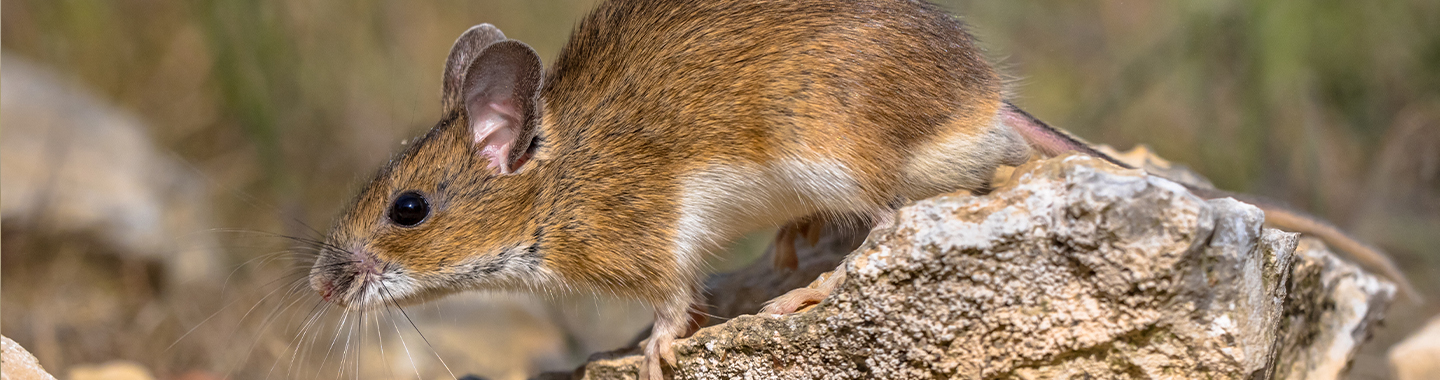
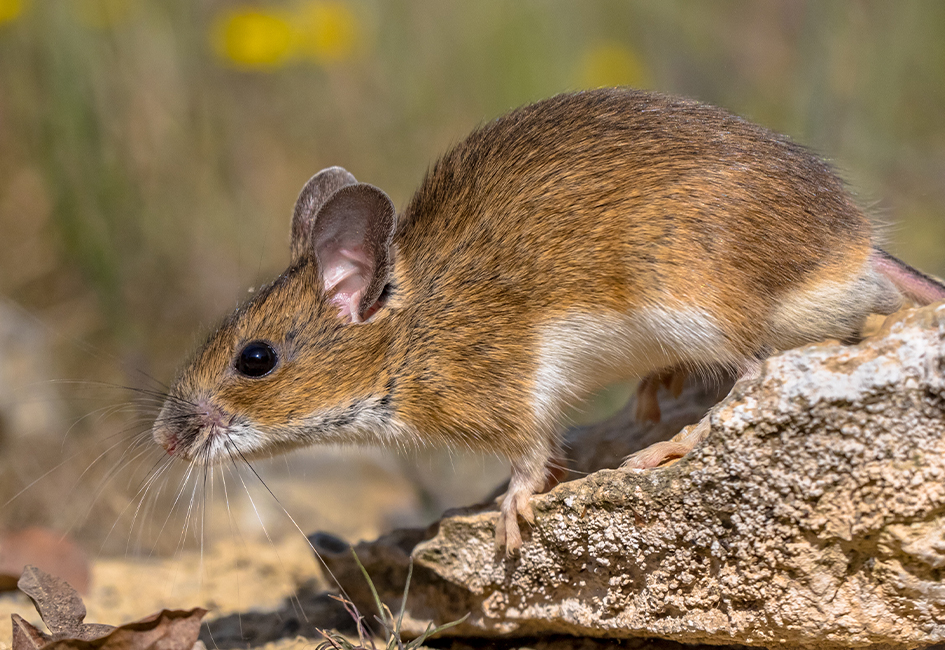
Habitat
Occurrence: The yellow-necked mouse is native to Europe and western Asia up to the Ural Mountains. In southern Europe it occurs mostly in mountainous areas. Their range reaches further north into Scandinavia than that of the wood mouse.
In fact it´s the yellow-necked mouse and not the wood mouse that prefers to life in the woods. It is mostly found in deciduous wood land with large nut-bearing trees such as the oak, beech or hazel. It can also be found in parks, gardens, scrubby areas, hedgerows, orchards and buildings in rural areas. Sometimes the Yellow-necked mouse overwinters also in houses.
Inside of buildings they populate the same areas as house mice.
- Attics
- Garages
- Garden sheds
- Basements
- Ceiling, floor and wall voids, often near corners and heat sources
- Corners in cluttered areas
- Beneath cabinets
- Furniture voids - couches, chairs, dressers
- Bases of kitchen furniture and appliances
- Cluttered, neglected drawers
- Storage boxes
Lifestyle / behaviour
Despite it´s close relationship to the wood mouse, the yellow-necked mouse has a bit different way of life. It prefers tall trees to bushes or shrubs and is a far better climber than the wood mouse. Furthermore, it is slightly better adopted to lower temperatures and occurs more North and at higher altitudes than the wood mouse.
Mainly nocturnal activity to avoid predation. They are active for a single period each night. These mice are expert climbers and are active on the ground as well as in the tree canopy.
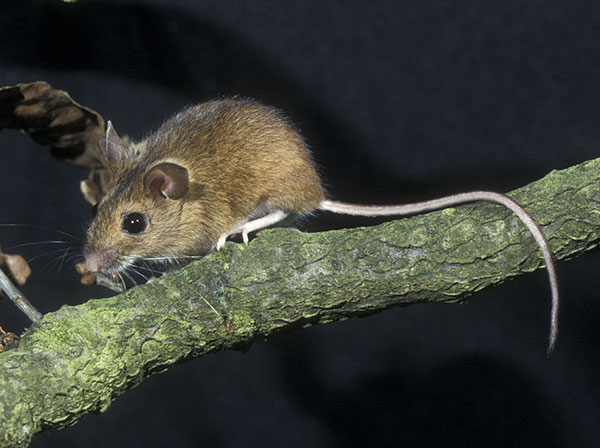
Yellow-necked mice live in burrows, holes in tree trunks and hollow logs. Sometimes, nests are found in nesting boxes for birds or dormice. Yellow-necked mice also invade buildings to overwinter. The burrow is about 50cm underground and usually has several entrances, a nesting chamber and several food storages. The nesting chamber is clad with soft materials like moss, leaves and fibres. Indoors, nests are padded with soft materials like shredded paper, textiles, hair etc. Often nests are built under the roots of trees or bushes to be safe from wild boars. When they have babies, females close the entrances with stones, leaves and twigs before leaving the burrow. Good and safe burrows are used over generations. In winter, nests are populated by several individuals, but when breeding season starts each animal occupies its own territory.
Nest Location: Less than 20m from food source. Yellow-necked mice are very mobile and travel up to 1200m in one night.
The territory of a male ranges over several female territories. The males mark their small territories with urine and defend them aggressively against intruders. A male territory can be up to 2000 -15000sqm, a female territory 200-300sqm. Populations may reach around 60 animals per hectare.
Yellow-necked mice like to gnaw in different places and often. Small amounts of food are ingested in different places. Not only food but also other materials are gnawed (building materials, Styrofoam, wood, paper, cables). They collect food and carry it to safe hiding places to eat under cover. Food is stored inside the burrow and in the surroundings.. The distance between source and the cache can be up to 15 meters. Forgotten or abandonded food stores play a major role in the dispersal of crop trees and other food plants.
As many rodents, yellow-necked mice have reduced ability to recognize colours but have excellent night view. They can see infrared light, such as coming from trail cameras for instance.
Yellow-necked mice do have a magnetic sense and can find back to their nests over long distance directly. Important point when you trap them alive. Release them not closer than 5km from your home. In the dark, they orientate by whiskers and body hair along walls and other vertical surfaces and follow their urine scented traces and smear marks.
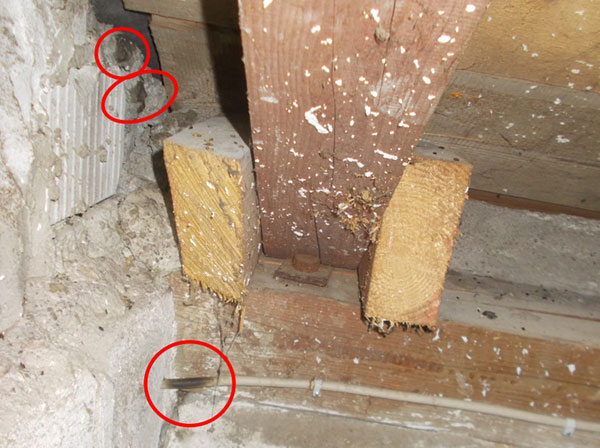
Dark and smelly smear marks on strongly frequented mouse runway across wall and cable.
Yellow-necked mice are an important food source for many predators: owls, raptor birds, martens, foxes, cats, weasel, stoats, snakes etc. Predators are often avoided by means of impressive leaps to safety. When gripped at the tail, the skin rips off easily and the mouse may escape (tail autonomy). This trick works only once, the skin does not recover, instead the skinned part dries out and falls off. But normally, the tail is used for climbing, balancing and when standing on the hind legs.
They do not hibernate and are active in winter. But when conditions are very bad, they can fall into a torpor (all vital functions reduced to minimum).
Yellow-necked mice have an excellent hearing and are sensitive to ultrasonic sound. During courtship, males sing ultrasonic songs for the female. Mouse baby calls are also in the ultrasonic range.
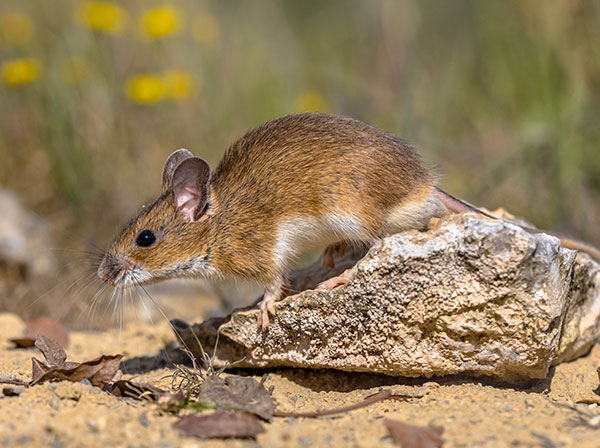
Male yellow necked mouse scenting a landmark.
Nutrition
Yellow-necked mice feed on many different foods, depending on the seasonal availability: all kinds of seeds, especially tree seeds, acorn, beechnuts, nuts, cherry stones, buds, berries, fruits, moss fruit bodies, fungi, green plants and roots. Food is stored in food chambers inside the burrow or in safe feeding places.
Especially in spring and summertime 20% of the food can be insects, spiders, worms, snails and other small animals. Recent research showed that mice do not only destroy Styrofoam or candle wax, but also can digest it at a certain extent thanks to special gut bacteria.
Daily Amount: 3-6g
Reproduction
- Litter Size: 2-11, mostly 4-5 pups
- No. of Litters: 2 -4 (in central and northern Europe only 2, in spring and autumn)
- Sexual Maturity: 3 months
- Gestation Period: 25-30 days
- Breeding Season: March to October
Yellow-necked mice do reproduce at a lower rate than house mice or common voles. Calamities with huge numbers of Yellow-necked mice have not been observed. Mating usually starts between three and six months.
Most of the time, a dominant male mates with several female. Only at times of high population density, regular social structures and territories collapse and female mate with many male to reduce social stress and avoid infanticide by frustrated male.

Facts
- Scientific Name: Apodemus flavicollis
- Other Names: yellow-necked field mouse, yellow-necked wood mouse, and South China field mouse
- Colour: back reddish brown; belly white with a sharp demarcation line between brown back and white belly; yellow band at the throat which is sometimes reduced to a stain. Younger mice are more greyish than adults.
- Weight: Adults: 25 – 65g
- Tail: bit longer than body, covered with fur, top dark underside white.
- Body: 9 – 13cm
- Ears: rounded, larger than house mouse, slightly larger than wood mouse
- Eyes: larger than house mouse, protruding
- Hind legs: longer than house mouse and well developed. Covered with white fur
- Lifespan: 1-2 years
- Droppings: 4-7mm
Mice can be detected by sounds, droppings, gnaw marks, and urine odours. Yellow-necked mice are not shy, Often, when a human observer remains quiet and still the mice will emerge. Even though the Yellow-necked mouse feed on plants, real damage in their natural habitats is low. They can damage seedlings or young trees and thus cause reductions in reforestation. In their natural habitat they are regarded as beneficial species. More trouble occurs inside of human buildings.
In winter, Yellow-necked mice invade human housings. In warmer countries they also come in summer to human buildings to find shelter from heat.
As other rodents, Yellow-necked mice destroy food and feed by direct consumption as well as by contamination with saliva, urine, droppings and hair.
Additional, damage is produced by gnawing materials like paper, cardboard, insulation material, packaging, textiles, cables, pipes and wood, be it for opening food containers, gaining nesting material, making slip throughs wider or simply to grind of the incisor teeth.
Yellow-necked mice can be harmful to health. They harbour pathogens and parasites and carry them into human housings. Yellow-necked mice bear fleas, ticks, mites, and tapeworms. They transmit tick-borne encephalitis, Toxoplasmosis and gut viruses. In recent studies, the Dobrava Virus, that causes a severe type of Hanta disease was found in Yellow-necked mice. Transmission of pathogens occurs by contact with faeces, urine, saliva, blood or hair of the rodents.
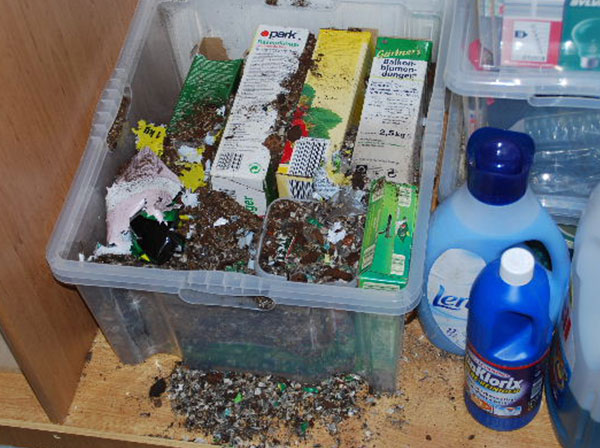
Most common evidence for mouse activity is the droppings. Even a small mouse infestation can produce literally thousands of droppings in a short period of time. An adult mouse typically produces 50 to 75 droppings per day. Yellow necked mouse poop is usually dark-coloured, 5 – 7 mm in length. The droppings look almost like house mouse poop.
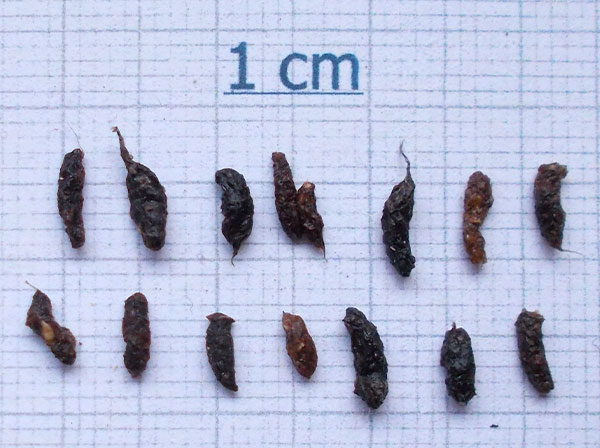
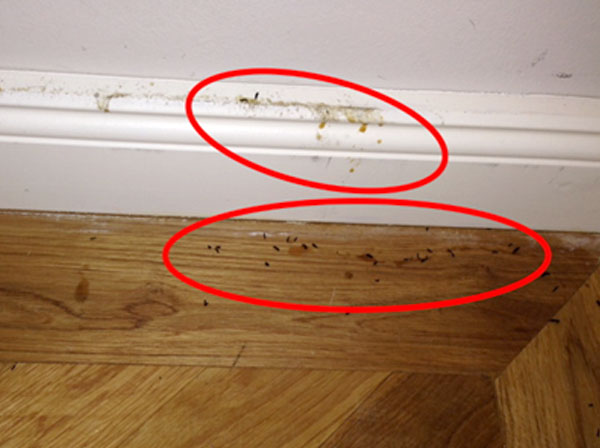
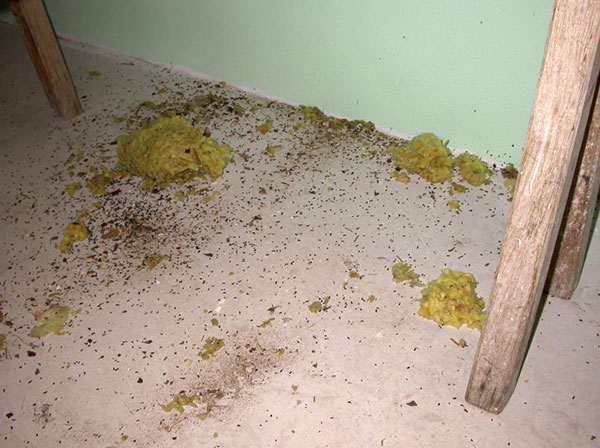
Yellow necked mice love to gnaw on various material. The gnaw marks and shredded materials are an additional evidence for the presence of mice. According the witdh of the teeth marks mice can be distinguished from rats. A mouse tooth is 0,5mm, a rat’s tooth is 2-3mm wide.
Besides chewing wires, mice gnaw on plastic items, wood, corners of cereal boxes and bags. Additionally, they shred paper, cardboard and textiles to gain nesting material.
Mouse damage holes are typically small, clean-cut holes about 1-2cm in diameter.
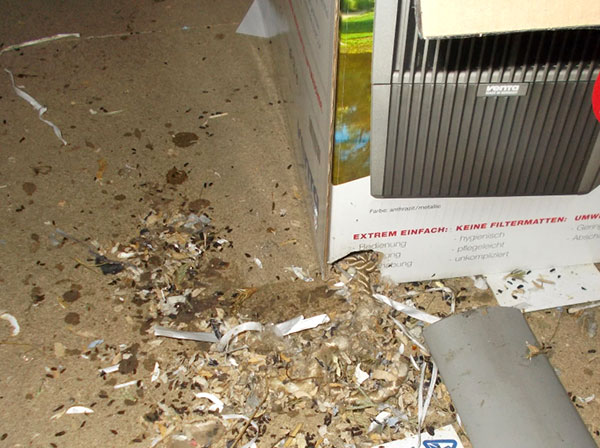
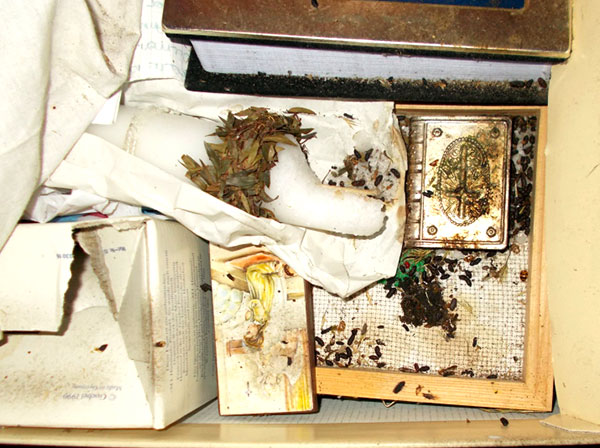
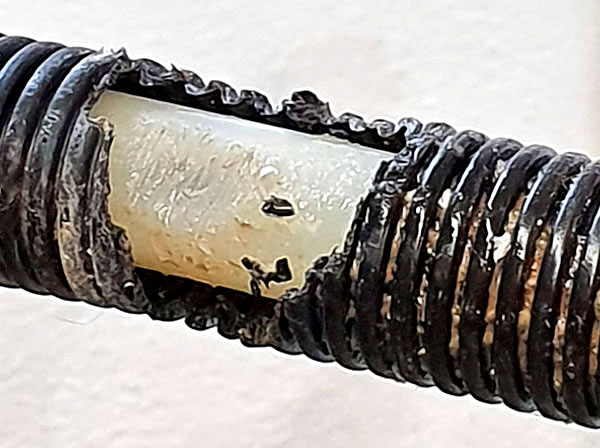
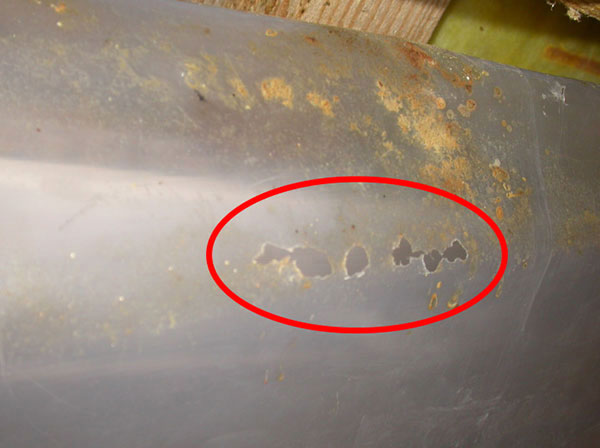
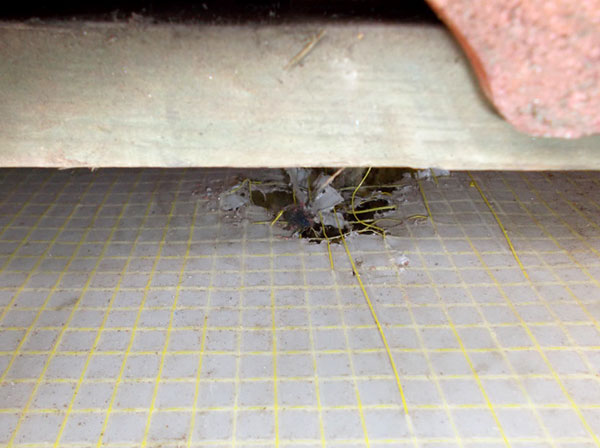
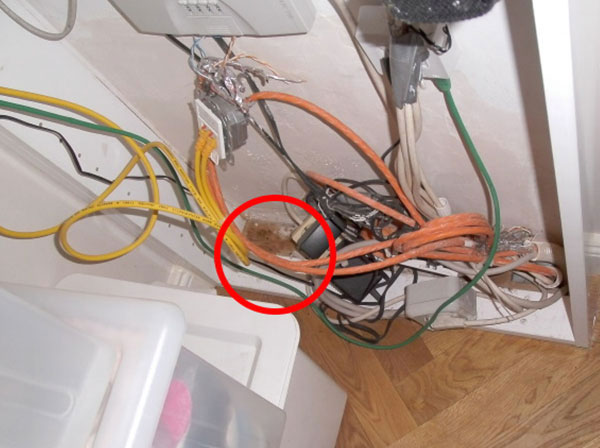
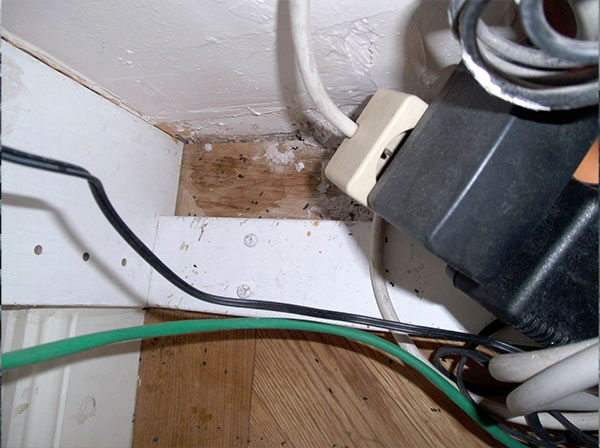
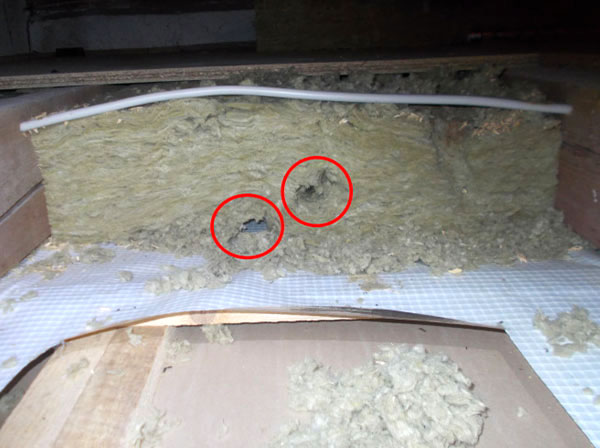
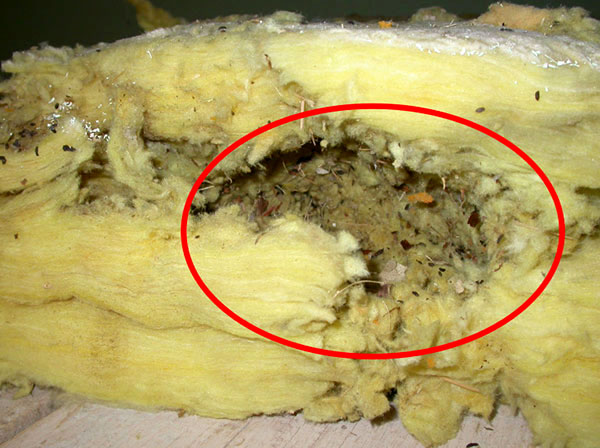
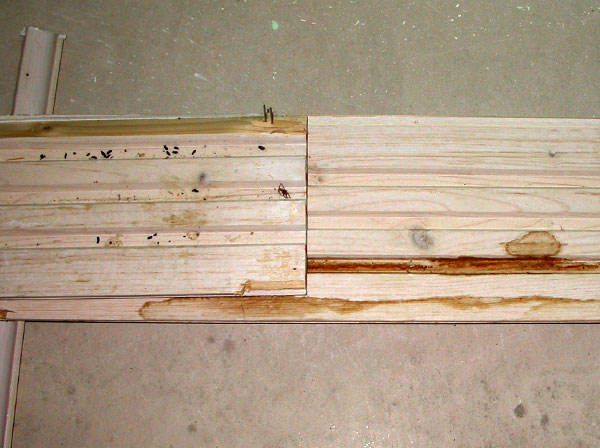
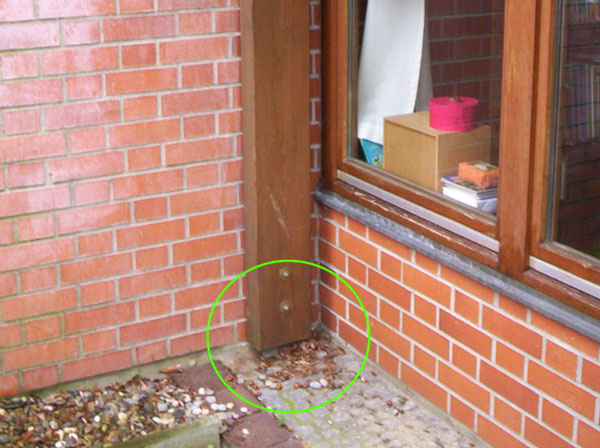
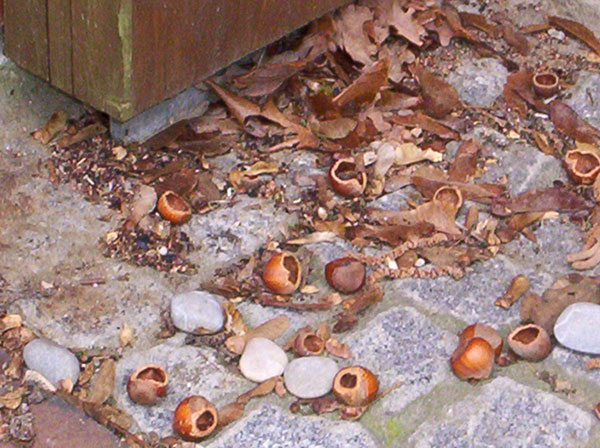
When mice are active, they make noise by gnawing or by running around in empty spaces in ceilings or walls. Because of their nocturnal activity, these sounds can be especially annoying to the human inhabitants.
Mice do continuously lose urine as they walk about. The smell helps them to orientate themselves in the dark. With substantial or long-lasting infestation, a strong smell will be detected. Cat and dog owners may see their pets excitedly sniffing, probing and scratching places, where mice have been.
Management and control measures
Conservation status: Yellow-necked mice are not an endangered species, nevertheless they are protected by law in some countries, such as Italy and Germany. Please check your national or regional regulations before starting control measures.
Prevention
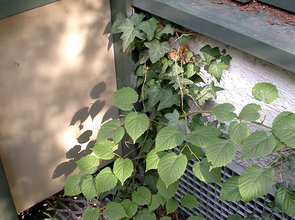
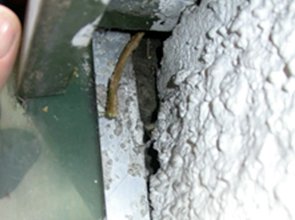
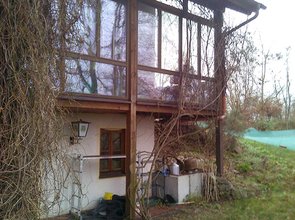
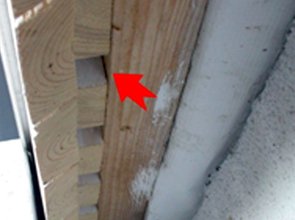
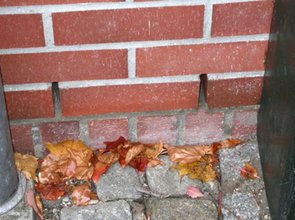
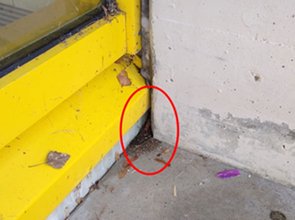
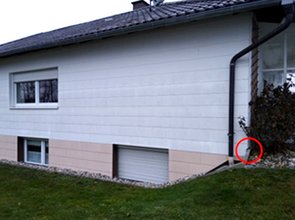
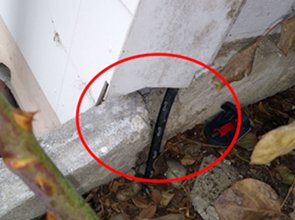
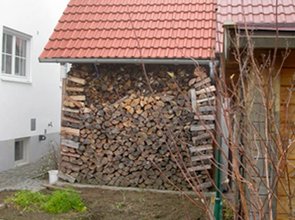
Rodent population will increase in conditions that allow easy access to abundant food and good protective shelter. These should be avoided.
The best time to act against mice is in autumn, when crops have been harvested and the cold, wet weather sets in. The pests leave their summer quarters and look for dry and warm shelter in and on buildings. It is best to catch or drive the rodents away before they become ensconced in buildings.
It is always interesting to find out how the mice came into the building. Mice need an opening of only 6mm diameter to gain entry so there are often many access points aroundthe perimeter of a building. Mice penetrate mainly through open or poorly closing doors and gates, through basement windows, lighting shafts, air intake openings, pipe ducts, cable ducts, cooling and ventilation systems, outdoor lights, transformer stations, switch boxes and other apertures in outer walls. If possible, access points should be sealed to prevent future infestations. SWISSINNO Rodent Stop Steel Wool is a quick and easy fix to plug wall outlets, holes and cracks.

Wood mice are excellent climbers. Planted facades, wood cladding and insulation offer ideal climbing aids.
Eliminate nesting possibilities to discourage mice from colonising the site. Get rid of piles of wood stacked against house walls, and of bulky rubbish on the site, and of dense ground-covering vegetation to make the area unattractive for nesting.
Remove all food sources and avoid excessive bird feeding. Store foodstuffs, pet food and seeds in rodent-proof containers and not in bags or boxes.
Ultrasonic Repellents

Ultrasonic Rodent Repellents are an effective method of scaring mice away and preventing them from entering buildings. High-pitched frequency sound waves emit a non-repetitive pattern to prevent rodents from habituating to the sound.
It is important to note that ultrasonic frequencies do not travel through walls, so at least one repellermust be placed in each room.
Ultrasonic repellers are not completely effective on their own. For maximum control they should be incorporated into an integrated pest management strategy comprising mechanical traps with food deprivation, sanitation and the closure of access routes.
Trapping

Mousetraps are an effective method of non-toxic and humane mouse control. There are 3 types of mouse traps commonly used for rodent control: Snap Traps, Catch Alive Traps, and Electronic Traps.
The following table gives an overview of the different SWISSINNO mousetraps:
A SWISSINNO mousetrap provides a quick and easy solution to a rodent control problem and it can be used many times over. A big advantage of using a mousetrap is that it retains the animal’s carcass so that the ‘trapper’ can dispose of it safely. Death by poison is never instantaneous so the animal may leave the scene and die out of sight in an inaccessible place like behind the skirting boards or under the floor boards where it will decompose emitting noxious odours and attracting flies, maggots and other insects into the home.
Yellow necked mice can get 3 times bigger than house mice. Especially in Northern regions, huge specimen occur and overwhelm regular mouse traps. In this case consider using rat traps instead.
Mouse trapping: How to go about it:
- Before setting out traps, clean up the area removing all tracks, faeces and urine. This will disturb and disorientate the mice and make them less suspicious of the traps. It also helps to see were latest rodent activities took place.
- Remove all food and food sources. The hungrier the mice, the more readily they will accept the traps.
- Mice learn quickly from trap failures. A bad trap often does not make a complete catch but injures the animal and causes it to suffer and to become trap-shy. Only high-quality traps like SWISSINNO mousetraps are effective and suitable for animal welfare.
- Always check traps for proper function before use, especially for sensitive triggering and good spring tension. Don´t use traps that don’t set correctly or that fail to snap shut properly.
- Wear gloves during trapping. That’s not because of the smell of humans. Rodents in and around buildings are not shy about humans´ smell. The use of gloves is recommended for hygienic reasons as rodents, dead or alive, can transmit serious diseases via contact with their fur or body fluids.
- Good trap placement is the key to successful trapping. Set traps in areas of high rodent activity. Traps should be placed in the runways of the rodents. Mouse droppings and smear marks are good indicators. Traps are set best along walls or in corners and not in the middle of the room.
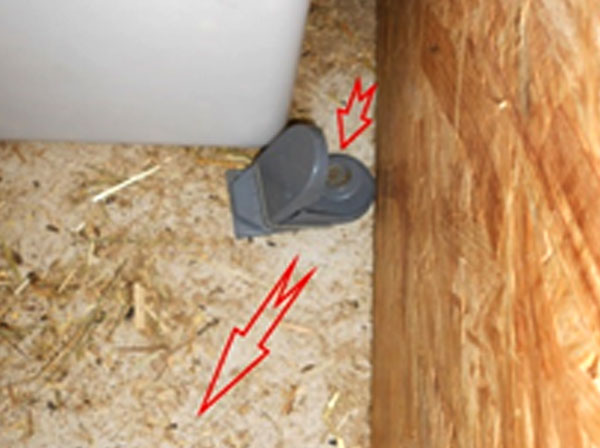
Optimal placement of the trap into a runway - Traps must sit firmly on the ground. Rodents shy off from traps that move or make sounds when touched. A secure position is also important for a clean strike and preventing failures.
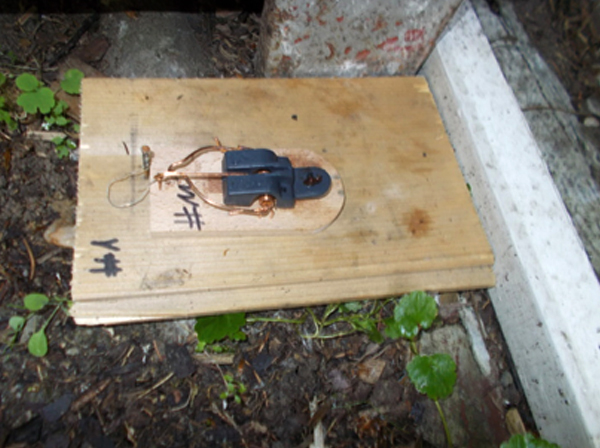
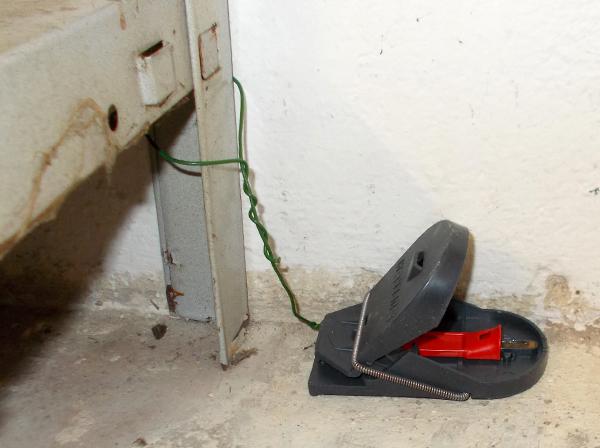
Trap set on a board to give a good standing and fixed with a wire so it can't be dragged away. - It is better to set out more than a single trap, even if you think, that there is only one mouse present. If there are more mice, several traps should be set out anyways. The distance between traps should be no more than 5m.
- If pets have access to the trapping sites, or when setting traps outdoors, the traps should be covered or placed in trap tunnels. This keeps non-targeted animals off the traps. The Mousetrap “No See-No-Touch” with its integrated tunnel is safe and does not need additional cover. The Mousetrap PRO SuperCat with patented trigger system is selective and helps avoid killing non targeted animals.

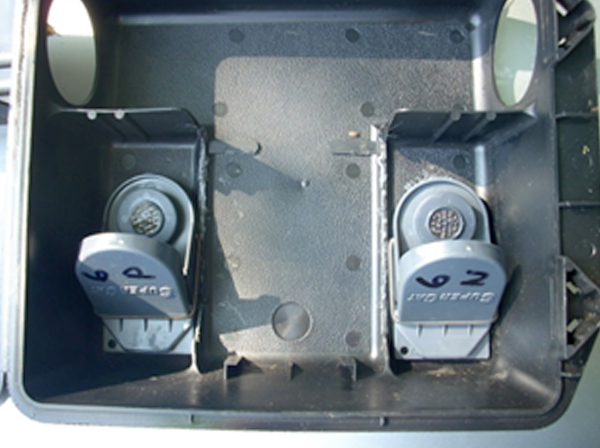
Traps set in a box to keep away non targeted animals and prevent trap loss. - Traps should be secured with a wire or cord to prevent loss. Caught mice can carry away the trap before they die. Outdoors predators often carry away caught rodents together with trap.
- Set traps must be checked daily. Carcasses should be disposed of before they become a hygiene problem. In case of an incomplete catch foul catch (not lethal) the animal must be dispatched. Traps that have been ignored should be moved to a different pposition. If needed, traps should be rebaited respectively reset. Non-targeted animals should be released, provided that they are not injured.
- If traps are found tripped but empty. (failed catches), it is recommended to switch to a different model of trap. The best trap for mice is the Mousetrap PRO SuperCat. With this model, no failures or imperfect catches occur.
- Most SWISSINNO Mousetraps are baited with peanut butter. Replacement bait syringes are available separately. The range of attractive of this bait is not more than 2 meters and rodents will not be lured from further away or from the exterior of the building.
- “Prebait”: If a trap is being ignored, placing a small amount of bait, no more than pea-size, in front of the trap may help.
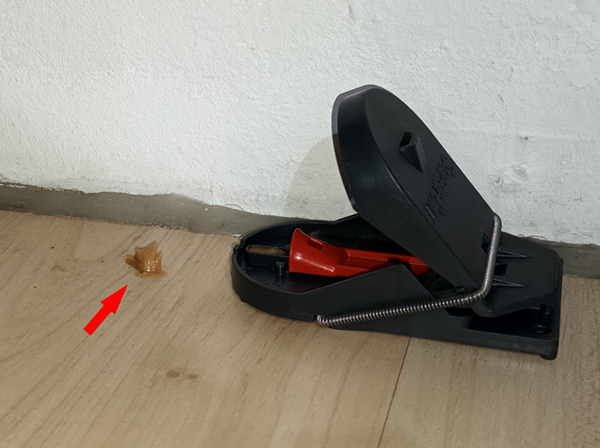
Mouse trap with small portion of peanut butter as “prebait” - If the peanut butter baited traps do not work, try a chocolate spread like Nutella instead. Nutella is an excellent alternative.
- The smell of a dead mouse from previous catch does not repel mice. In fact, used traps are more attractive to them. If traps need to be cleaned, use warm water only with a soft brush and not detergent.
- Catch alive traps should be checked every 4 hours. Otherwise the stress can kill the captive rodent. Caught live mice must be released at least 2 km away, otherwise they will find their way back.
- If there is evidence of the presence of species which are protected by law, it is recommended to contact local authorities before starting control measures. Already active measures would have to be stopped immediately until approved. Even the use of “catch alive” traps without authorisation represents an infringement.
Poison bait
It is better to fight mice with traps. SWISSINNO advises against the use of poison bait for several reasons:
- Toxic baits endanger the environment, children, pets, domestic, farm and other non-target animals.
- Poison baits cause slow and painful death of rodents. After consuming such bait, it takes several days for the animal to die.
- When using poison bait indoors, the mice often die in inaccessible places and the dead bodies cannot be disposed of. They decompose and give off strong, unpleasant odours that last for weeks. Later the dried-up carcasses serve for years as food for other pests such as flies, moths, and beetles.